What kind of taxi to choose in Seoul
Seoul’s official taxi guide says all taxis must charge by the meter unless a separately approved fare plan applies. That is the first thing to understand: the taxi you get, the time you travel, and whether you are going to or from the airport can all change the final fare. For ordinary city trips, the standard sedan taxi is the usual default. Seoul also lists SUV/van taxis, deluxe taxis, luxury taxis, international taxis, and accessible taxis, each with different service features and, in some cases, different pricing. Seoul Metropolitan Government taxi guide
For most short urban trips, the standard sedan taxi is the cheapest listed taxi class in Seoul’s official fare table. Larger taxis are better when you have more luggage or need more space, and international taxis are useful if you want a driver who can communicate in a foreign language. Seoul’s page describes international taxis as multilingual and notes that they can be used for airport pick-up, drop-off, tourism, and everyday trips.
Seoul standard taxi fares
| Item | Fare | Conditions |
|---|---|---|
| Base fare | ₩4,800 | Up to 1.6 km, daytime |
| Distance fare | ₩100 per 131 m | Daytime metered fare after the base distance |
| Time fare | ₩100 per 30 seconds | Daytime when the meter is counting time in slow traffic |
| Night base fare | ₩5,800 to ₩6,700 | 10 PM–11 PM: ₩5,800; 11 PM–2 AM: ₩6,700; 2 AM–4 AM: ₩5,800 |
| Night distance fare | ₩120 to ₩140 per 131 m | Depends on the night period |
| Night time fare | ₩120 to ₩140 per 30 seconds | Depends on the night period |
| Outside-city surcharge | 20% | Where the outside-city surcharge applies; special joint operating areas have separate rules |
| Late-night surcharge | 20% to 40% | 10 PM–11 PM: 20%; 11 PM–2 AM: 40%; 2 AM–4 AM: 20% |
| Late-night outside-city surcharge | Up to 60% | Combined case |
These are meter fares, not fixed quotes. The meter can count both distance and time, so slow traffic matters. Seoul also notes that fares are rounded to the ₩10 unit in the final calculation. If you are traveling late at night or leaving the city, do not compare your ride to a daytime base fare alone.
Airport rides: choose the service before comparing the price
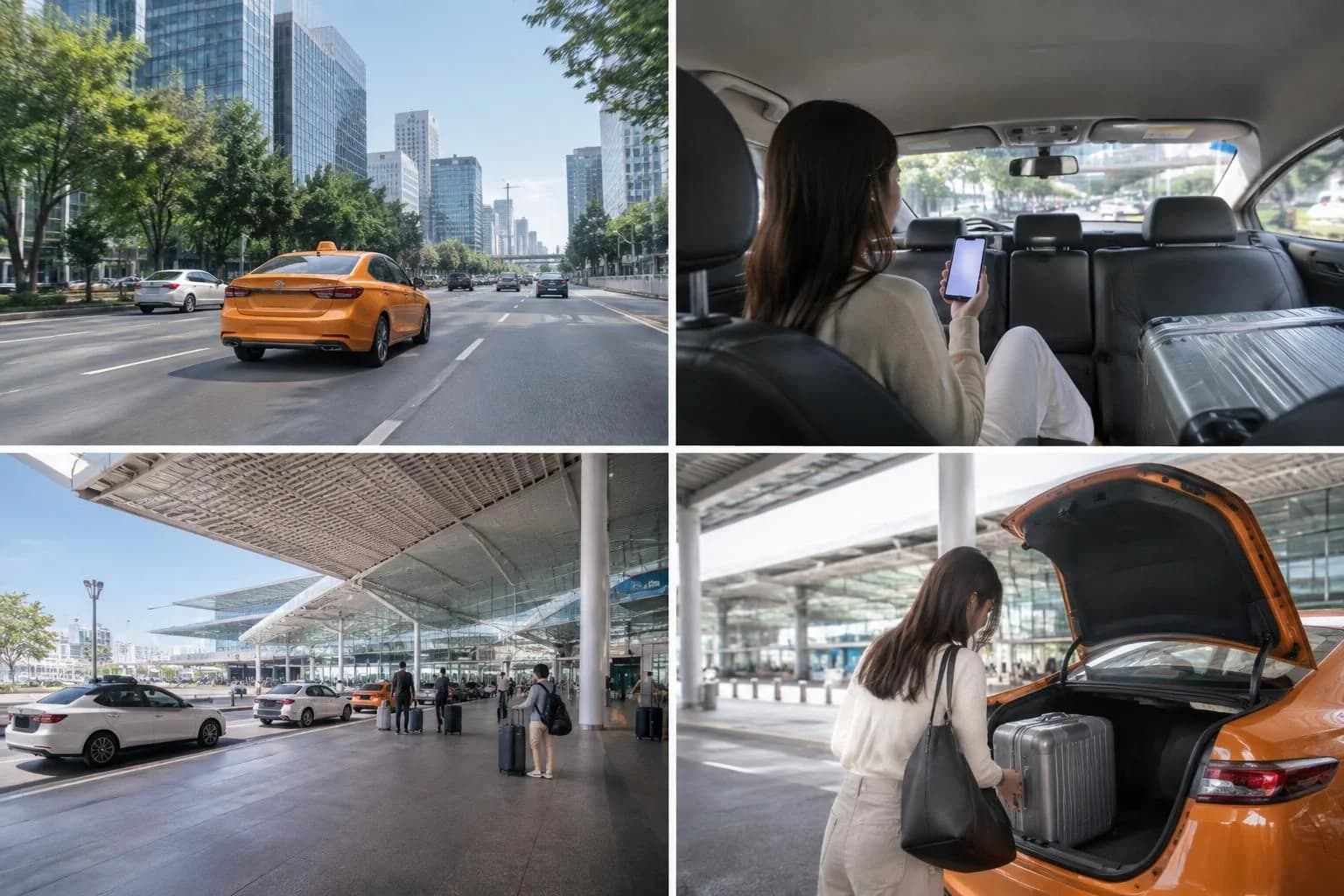
An ordinary metered taxi and an international taxi with an airport section fare are different services. Seoul publishes airport zone prices under its international taxi fare rules. The sedan prices range from ₩70,000 to ₩95,000 by zone; they are not a fixed fare for every ordinary taxi leaving Incheon Airport. Confirm which service and fare plan you are booking before departure.
| Service | Pricing | What to check |
|---|---|---|
| Standard taxi from the official rank | Metered fare | Destination, tolls and any applicable surcharge |
| Deluxe or large taxi | A different tariff from a standard sedan | Vehicle class, luggage capacity and fare rules |
| International taxi using the published airport section fare | ₩70,000–₩95,000 for a sedan, depending on the Seoul zone | Service type, destination zone and included charges when booking |
Incheon Airport is a joint operating area. Its guide says no boundary surcharge applies for trips from the airport to Seoul, Incheon, Goyang, Gwangmyeong, Gimpo or Bucheon. For destinations beyond that area, boundary rules depend on the route and taxi region: the guide lists 20% for Seoul/Gyeonggi taxis and 30% for Incheon taxis. These are not blanket charges on every airport ride. Night charges also vary by vehicle and region. Incheon Airport taxi and surcharge guide
How to use an app or a map screen without needing Korean
Seoul’s taxi service page says some taxi apps are linked to KakaoTalk and are widely used, while international-service apps can be easier to use if you do not have a Korean mobile number or credit card. In practice, the easiest step is to save the destination in a map app and show the address on your phone before the car leaves. If your phone supports translation, you can also use a translation app or camera translation to confirm the destination text. You do not need to memorize a Korean phrase list to do this.
Payments, tolls, and receipts
Seoul’s official guidance says taxi fares can be paid with a public transportation card, and the city’s taxi receipts now show more fare detail, including surcharges and toll information. That is useful because tolls are separate from the fare when a route uses them. If you are using a routing app, check whether the estimate includes tolls before you assume the final amount. Seoul overcharging and receipt-improvement notice
Keep the receipt every time. If you pay by card, also keep the card slip or app record. If something looks wrong, write down the pickup point, destination, time, and vehicle number if you have it. Seoul’s guidance specifically says to record the situation with your smartphone and keep enough detail to report it later.
What to save and where to report a fare problem
Keep the full vehicle registration number, receipt, pickup point, destination, time and amount paid. Save the app trip record or card slip if you have one. Those details make a report more useful than a complaint based on memory alone.
For a Seoul taxi complaint, the city lists the 120 Dasan Call Center at 02-120. Its published foreign-language instructions are 02-120, then 9 and the language code; English is 1. The listed foreign-language hours are 9 AM–6 PM KST. The same city guide links to an online QR complaint form and lists taxi120@seoul.go.kr. For tourism guidance, the Korea Travel Hotline is 1330 domestically or +82-2-1330 from overseas. Airport information is available at 1577-2600. Check the official guide for the appropriate contact before reporting. Seoul taxi complaint and language-support guide
If there is immediate danger, seek emergency help first. A fare complaint can follow once you are safe.
Seoul, London and New York: compare the fare structure
| City and service | Starting fare | Conditions that affect the total |
|---|---|---|
| Seoul standard sedan | ₩4,800 for the first 1.6 km, daytime | Distance, traffic time, night rates and applicable surcharges |
| London licensed black cab | £4.40 minimum; TfL fare card effective 25 April 2026 | Meter tariff, distance, journey time and any airport or booking charges |
| New York City yellow taxi | $3.00 initial charge | 70 cents per 1/5 mile above 12 mph or per 60 seconds in slow traffic/stopped, plus applicable surcharges and tolls |
These figures describe different fare systems. They do not show that one city is cheaper: the currencies, included distances and extra charges differ. A price comparison needs the same journey conditions and a dated exchange rate. For your own trip, compare a complete estimate with the relevant surcharge and toll conditions. TfL taxi fare card, effective 25 April 2026 · New York City TLC metered fares
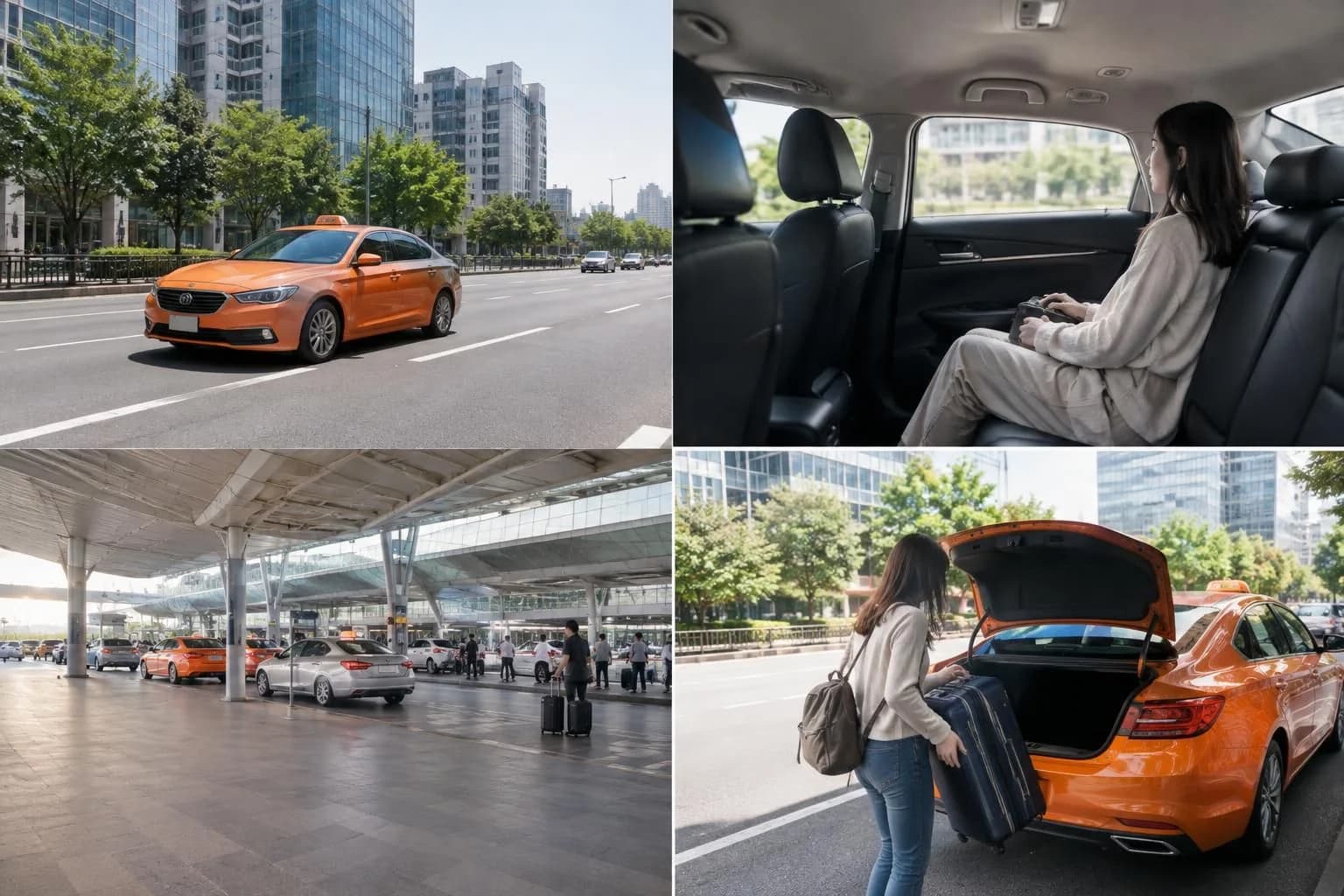
At the airport: use the official taxi rank, not a random offer
At Incheon Airport, use the designated taxi area and follow the airport’s pickup guidance. If someone inside or near the terminal offers you a ride outside the official queue, decline it and go back to the airport taxi stand or help desk. The airport’s taxi guide is the correct reference for pickup areas and the surcharge system that applies there.
A simple rule helps: if you did not get the ride through the official taxi queue or a trusted booking system, do not assume the fare or the vehicle is part of the airport taxi framework. When in doubt, use the airport’s official information and support channels before you get in.