A visit to a jjimjilbang in Korea can include a bath, time in a heated room, a snack and a long rest on a warm floor. The experience is familiar enough to appear in Korean television scenes, but your first visit can still raise practical questions: Which ticket do you need? Where do you change? Do you wear the provided clothes everywhere?
The most useful thing to understand is that the bathing area and the shared relaxation area have different clothing rules. Once you know where each part of the visit happens, the rest becomes much easier to follow.
This guide explains how to choose a facility, understand the price, use the lockers, enjoy the baths and heated rooms, and settle your bill before leaving.
What is a jjimjilbang, and why do people go?
A jjimjilbang is a Korean leisure facility built around bathing, heated rooms and places to relax. A neighbourhood bathhouse may concentrate on washing and soaking, while a larger complex can add communal lounges, food counters and several themed rooms.
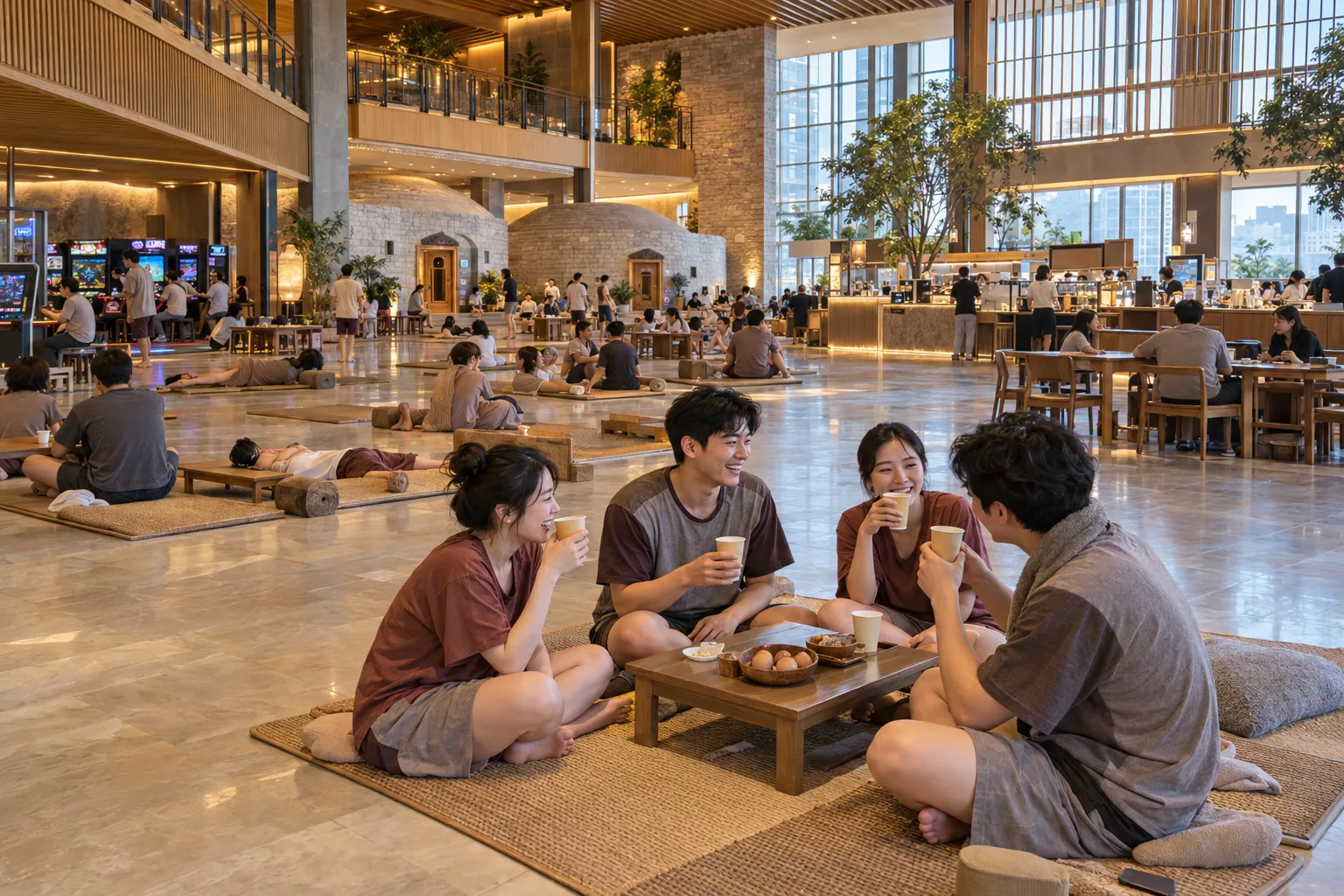
Part of the appeal is being able to spend unhurried time together. Friends can meet in the shared lounge, couples can reunite after using separate changing areas, and visitors can make a relaxed afternoon of it. You can enjoy the experience without booking a treatment or trying the hottest room.
It is an established part of Korean leisure culture. Seoul’s tourism guide highlights the year-round appeal of a traditional charcoal-sauna venue, while modern complexes have expanded the experience into a broader outing. What you find inside depends on the venue.
1. Understand the three different spaces
Changing and wet bathing areas: commonly separated into men’s and women’s sections, with lockers, showers and soaking baths. In a conventional communal bath, you remove your clothes before showering and bathing.
Shared jjimjilbang areas: communal lounges and dry heated rooms where visitors wear the facility’s shirt and shorts. This is where a mixed group can usually spend time together.
Water parks and resort pools: separate attractions at some large complexes, with their own ticket and swimwear requirements. Do not treat a swimming pool and a traditional bath as the same space.
For a concrete example, CIMER’s official guide specifies swimsuits in its Aqua Spa pools and jjimjil clothes in its Jjimjil Spa zone. Check the rules for the exact area you plan to enter.
If shared nudity is uncomfortable for you, ask about the route to the clothed communal area before paying. You may choose to skip soaking, but changing-room layouts and access arrangements vary. A private spa or accommodation with a private bath may be a better fit if privacy is essential.
2. How much does a jjimjilbang cost?
Compare the ticket’s included areas and time allowance, not just its headline price. Bath-only admission, a jjimjil-spa ticket and a water-park package can be different products.
These adult prices were checked against the operators’ published information on October 30, 2026. They are examples from large facilities, not a nationwide average.
SPA LAND, Shinsegae Centum City, Busan: ₩26,000. Standard admission covers up to four hours; the published extra-time charge is ₩5,000 per hour. Check SPA LAND’s official admission information.
AQUAFIELD Hanam, Gyeonggi-do: ₩26,000 for the Jjimjil Spa. The operator lists up to six hours, with ₩5,000 per extra hour. Water-park access is a separate product; the Multi Pass combines both. Select Hanam on AQUAFIELD’s current price page.
CIMER, Paradise City, Incheon: ₩40,000 for the Jjimjil Spa ticket. This is a four-hour ticket for the Jjimjil Spa zone, with a published ₩10,000 hourly overrun charge. Its wider Aqua Spa ticket is a different purchase. Compare CIMER’s ticket types.
Food, drinks, body scrubs, massages, some rentals and overtime can add to your bill. Before using a service, find its separate price and ask how it is charged.
For planning purposes, admission of ₩26,000 plus a hypothetical ₩10,000 allowance for refreshments gives a ₩36,000 budget before transport or other extras. That allowance is your spending plan, not a quoted snack package.
Online deals can have date, day-of-week or cancellation restrictions. Check the selected branch, visit date and ticket description before completing payment. Families should also confirm the venue’s minimum age, child pricing and supervision requirements.
3. Choose a facility and pack a small bag
Decide what you want from the visit: a straightforward bath, a few heated rooms, a sociable afternoon or a larger spa outing. Look at the facilities and current opening hours before choosing a ticket.
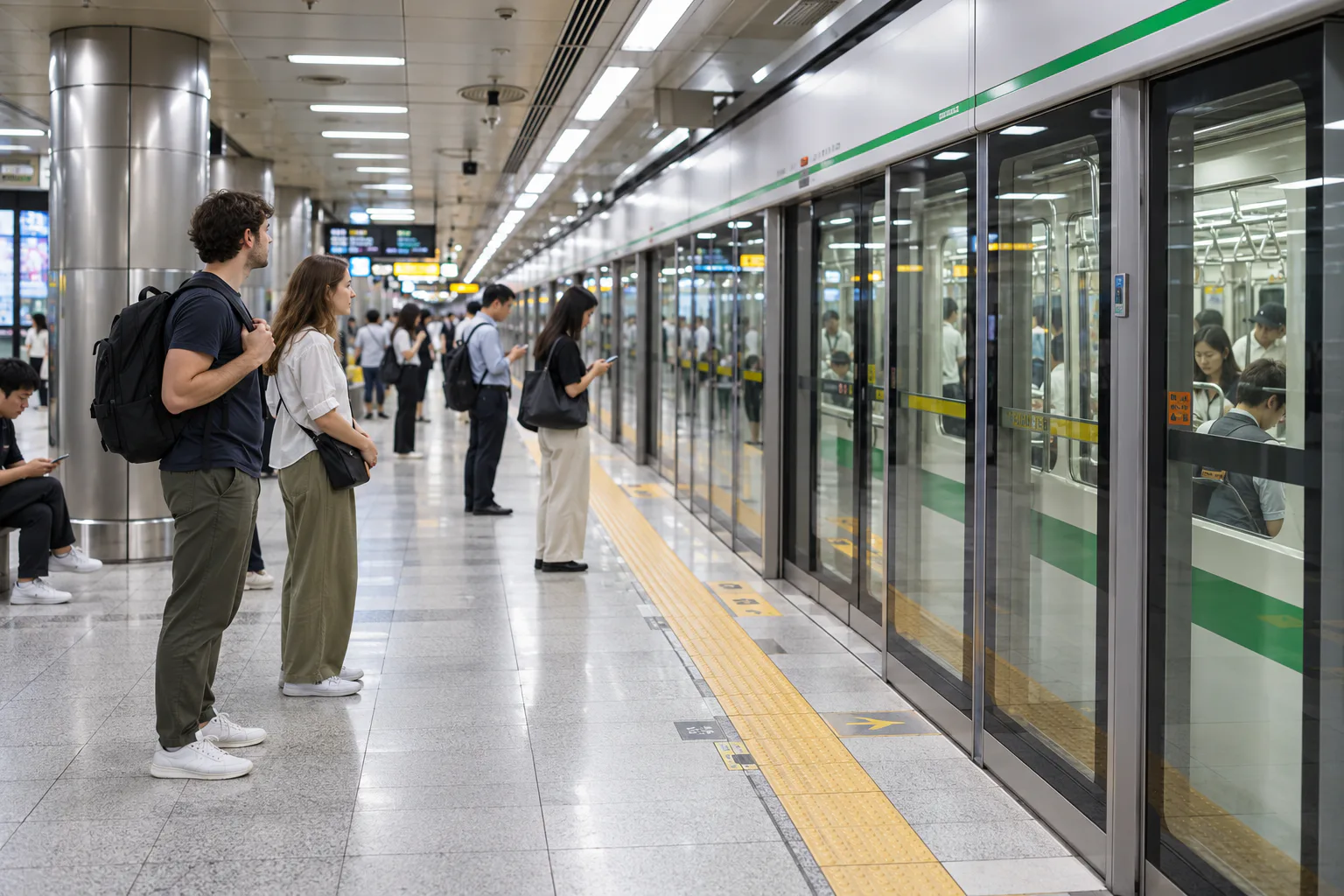
Check the journey home as well as the journey there. Our first-time visitor’s subway guide explains route planning, transfers and finding the right street exit.
A compact bag is easier to manage than a suitcase. Useful items include a payment card with a cash backup, your preferred toiletries, a hair tie for long hair, and clean underwear for afterwards. Bring any age or discount documentation the venue specifically requires.
Check what the ticket includes before packing towels or buying toiletries. Supplies and rental rules differ. Bring a swimsuit only if your chosen pool or water-park area requires one; it is not a substitute for the clothing rules in the communal baths.
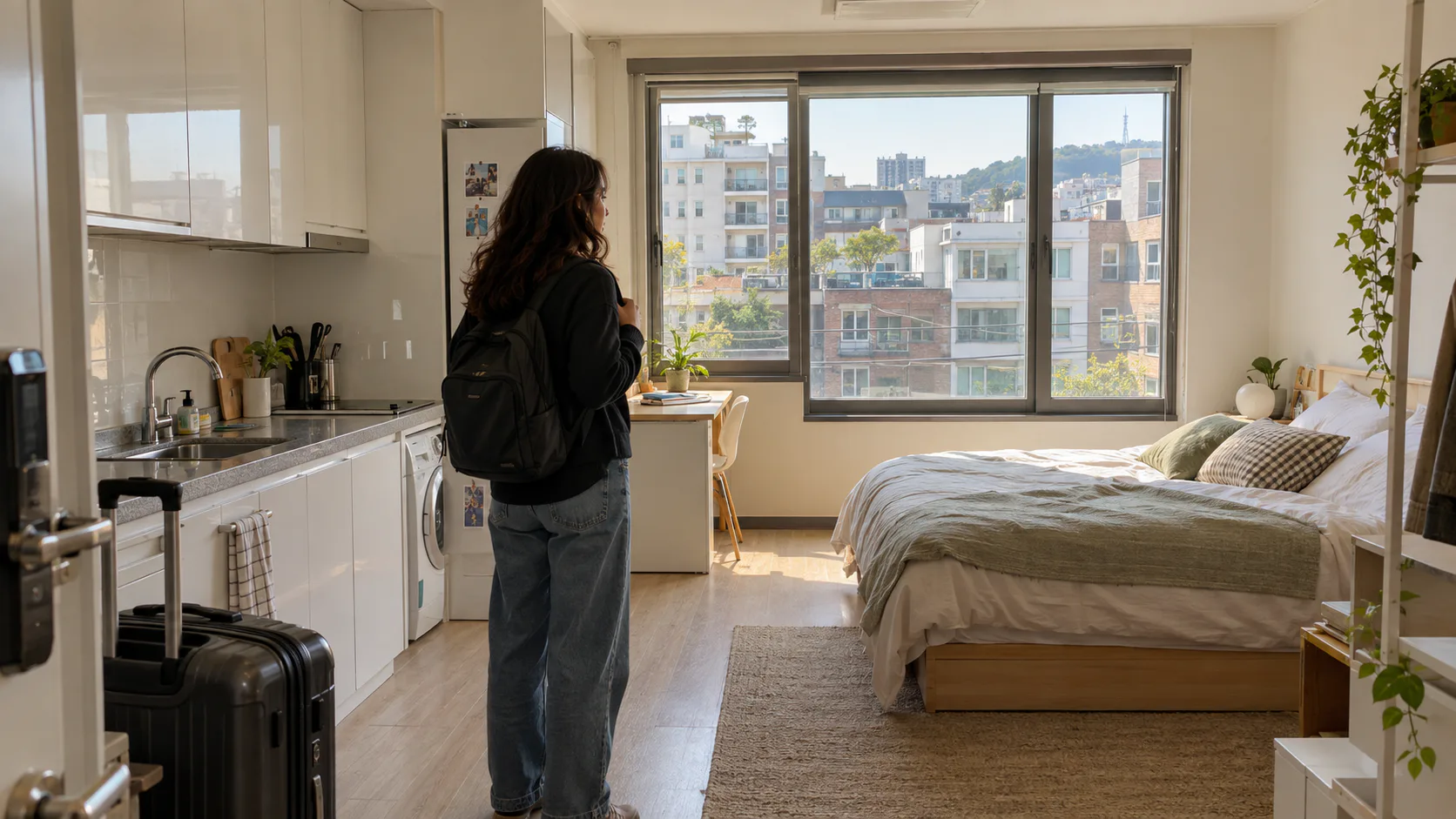
If you have luggage, confirm storage first. SPA LAND restricts large suitcases in the internal locker room and provides separately charged luggage lockers outside the ticket area. A clothing locker should not be assumed to fit your travel case.
4. Check in, put away your shoes and keep your key
At reception or the ticket machine, confirm the ticket you want, the included duration and the exit deadline. If you booked online, have the actual admission voucher or booking details ready; ask where it must be redeemed.
You will typically receive a locker number and a key or wristband. Some facilities link the shoe locker and clothing locker to the same number; others use a different arrangement. Follow the instructions given at that venue.
Find the assigned shoe locker and remove your shoes at the indicated boundary.
Place your shoes inside and secure the locker as instructed.
Continue to the appropriate changing area and find your clothing locker.
Store your everyday clothes and valuables, and keep the key with you.
Do this promptly after checking in. Some venues apply a short activation window to shoe lockers. If a locker will not open, ask a staff member instead of trying neighbouring doors.
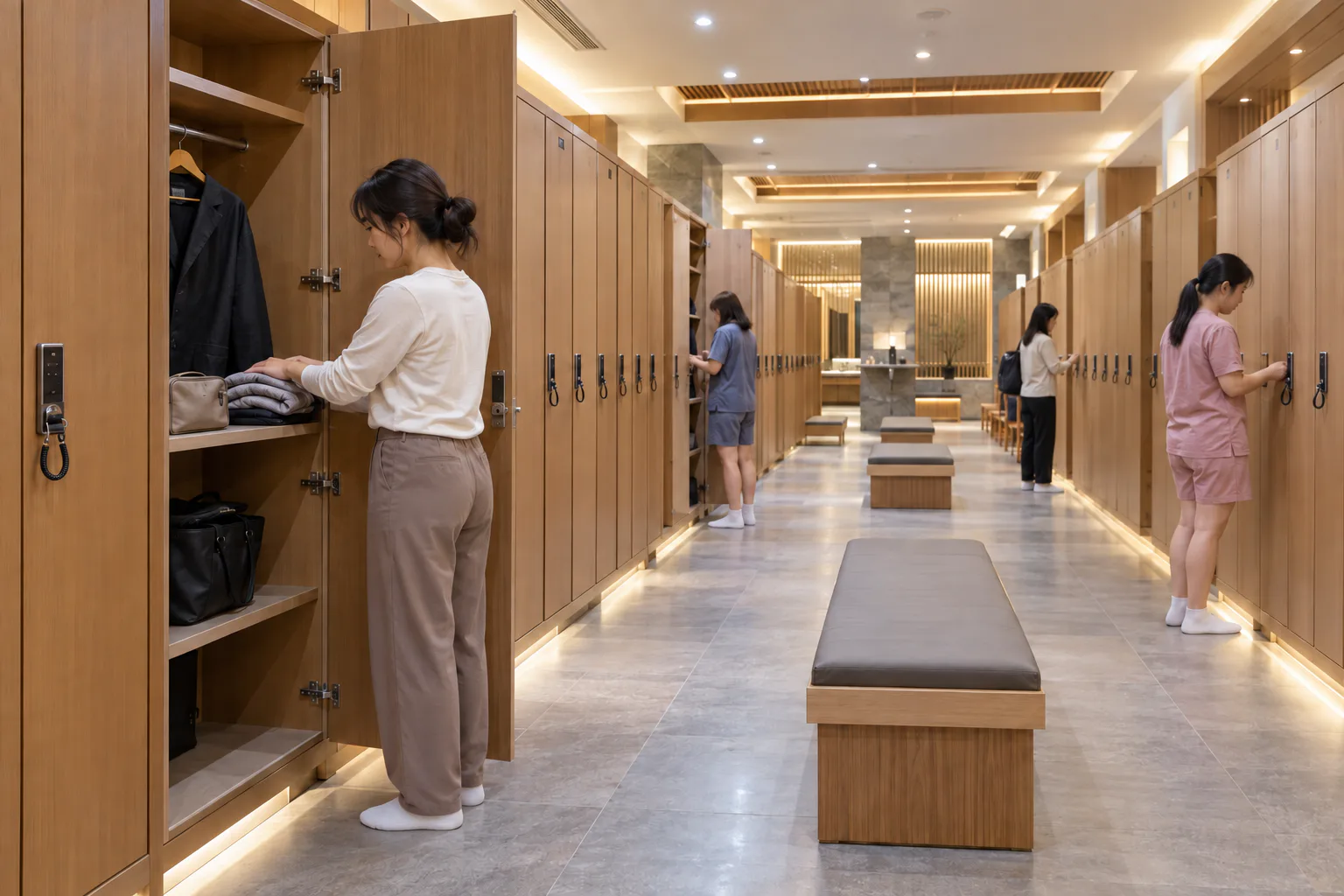
Store clothes and personal belongings in your assigned locker, and keep the key with you.
The key may also function as a payment device. AQUAFIELD’s One-Key system records purchases for payment when you leave. Treat the key as carefully as you would your wallet and report a loss immediately.
5. Use the showers before the soaking baths
In the conventional wet bathing section, leave your clothes in the locker and take the toiletries and towel you need to the washing area. Underwear and the facility’s shirt and shorts are not bathwear.
Wash properly with soap and rinse before entering a shared soaking bath. Use the washing stations for soap and shampoo, then enter the pool once you are clean.
At a seated washing station, use an available stool and basin, keep your belongings close and rinse the equipment after use. Avoid spraying another person’s station. Tie long hair up so it stays out of the shared water.
Walk carefully on wet floors, keep your towel out of the bathwater and leave space for others. You can keep the visit simple: wash, try a comfortable bath if you want to, rinse again and dry off before returning to the changing area.
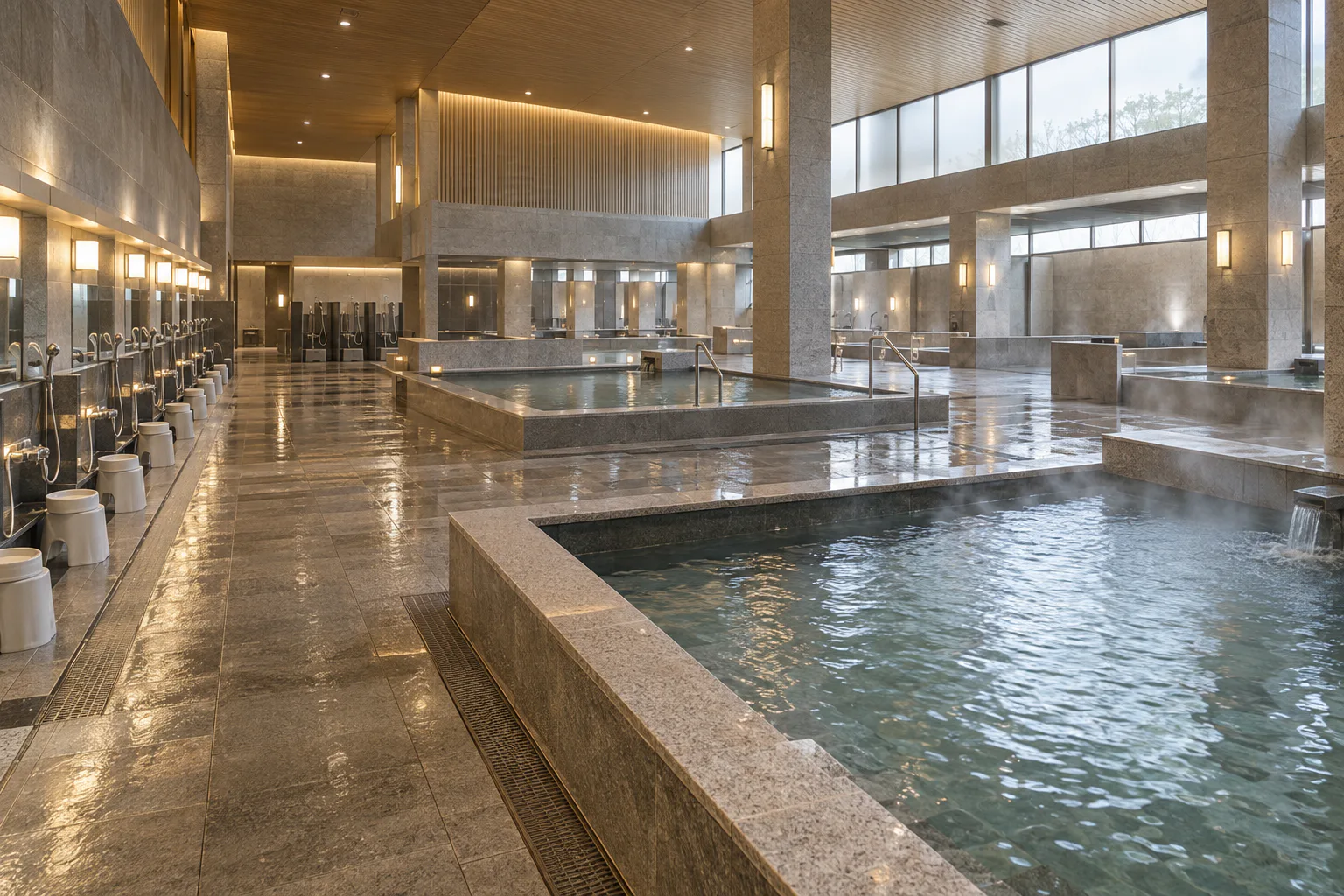
Use the washing stations before entering a shared soaking bath.
Keep your phone and camera in your locker. Changing and bathing spaces are private shared environments. AQUAFIELD explicitly prohibits photography and video in its locker rooms and sauna areas in its operating policy. Check restrictions elsewhere in the facility too; a clothed common area is not automatically a filming location.
6. Change into the provided clothes for the shared area
Dry yourself, put on the facility’s shirt and shorts, and follow signs to the common lounge. If you came with someone using a different changing area, agree on a meeting point outside the private sections.
The shared area is where the visit becomes more than a bath. You can sit together, rest, look around the heated-room options or take a break for refreshments. Keep your belongings within your own resting space and leave doorways and walking routes clear.
At larger complexes, the shared floor may also connect with cafe seating and entertainment areas. Check the facilities list when choosing a venue if games, meals or a larger social space are important to your visit.
There is no need to complete every room. A first visit can be enjoyable with one mild room and plenty of time in the lounge.
7. Try the heated rooms at your own pace
Larger complexes may have several rooms with different materials and temperatures. The names can sound elaborate, but the practical questions are simple: how warm is the room, what are the entry rules, and does it feel comfortable for you?
Begin with a milder room, read its posted instructions and keep the first session brief. Step outside whenever you want, take breaks and drink water. If you feel dizzy, sick or uncomfortable, leave the heat and ask staff for help.
Room materials and hot surfaces can feel different from the air. Use the permitted mat or towel as instructed, and keep clear of heaters and restricted areas. Do not pour water on stones or equipment unless that specific room explicitly allows it.
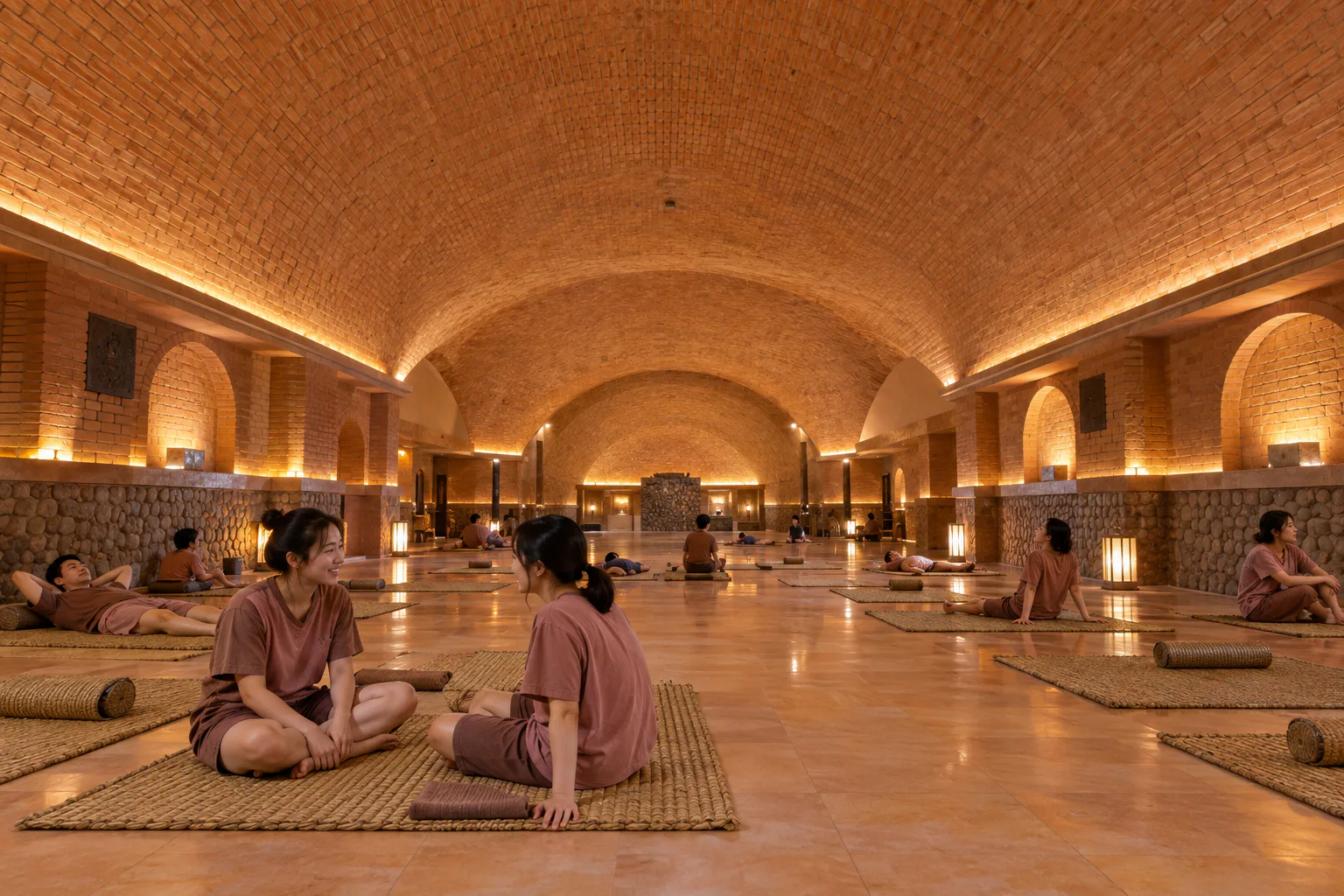
Choose a comfortable heated room and leave space for other visitors to rest.
Follow the facility’s posted health and entry restrictions. You can choose a cooler room or spend the visit in the lounge if the heated rooms do not suit you.
8. Enjoy the snacks, and check optional service prices
Roasted eggs and sweet rice punch are familiar jjimjilbang refreshments. Depending on the venue, you may also find simple meals, noodles or other snacks. The Korea Tourism Organization’s overview gives a sense of the food-and-relaxation side of the experience.
Check the menu price and payment method before ordering. If the purchase is charged to your key, you still need to pay for it at checkout. Keep track of your spending rather than treating the wristband as an unlimited pass.
A professional body scrub or massage is optional. Confirm the full price, availability, service description and booking procedure before agreeing. You can enjoy the baths and communal areas without buying a treatment.
Eat in designated areas and check outside-food rules before bringing a picnic. AQUAFIELD, for example, restricts food brought inside while allowing specified exceptions. Use your venue’s current policy rather than assuming every jjimjilbang has the same rules.
9. Can you sleep there overnight?
Check that exact facility before planning an overnight stay. A place with floor mats is not automatically open all night, and a timed ticket is not permission to remain after closing.
The large-facility examples above have published closing times: SPA LAND lists 22:00, AQUAFIELD Hanam’s Jjimjil Spa lists 22:00, and CIMER’s Jjimjil Spa lists 21:00. They should be planned as timed visits, with current hours rechecked before you travel.
If you find a venue offering overnight admission, confirm the overnight price, maximum stay, sleeping arrangements, luggage storage and re-entry policy. A shared resting area may suit some travellers, but it should not be mistaken for a reserved hotel bed or private room.
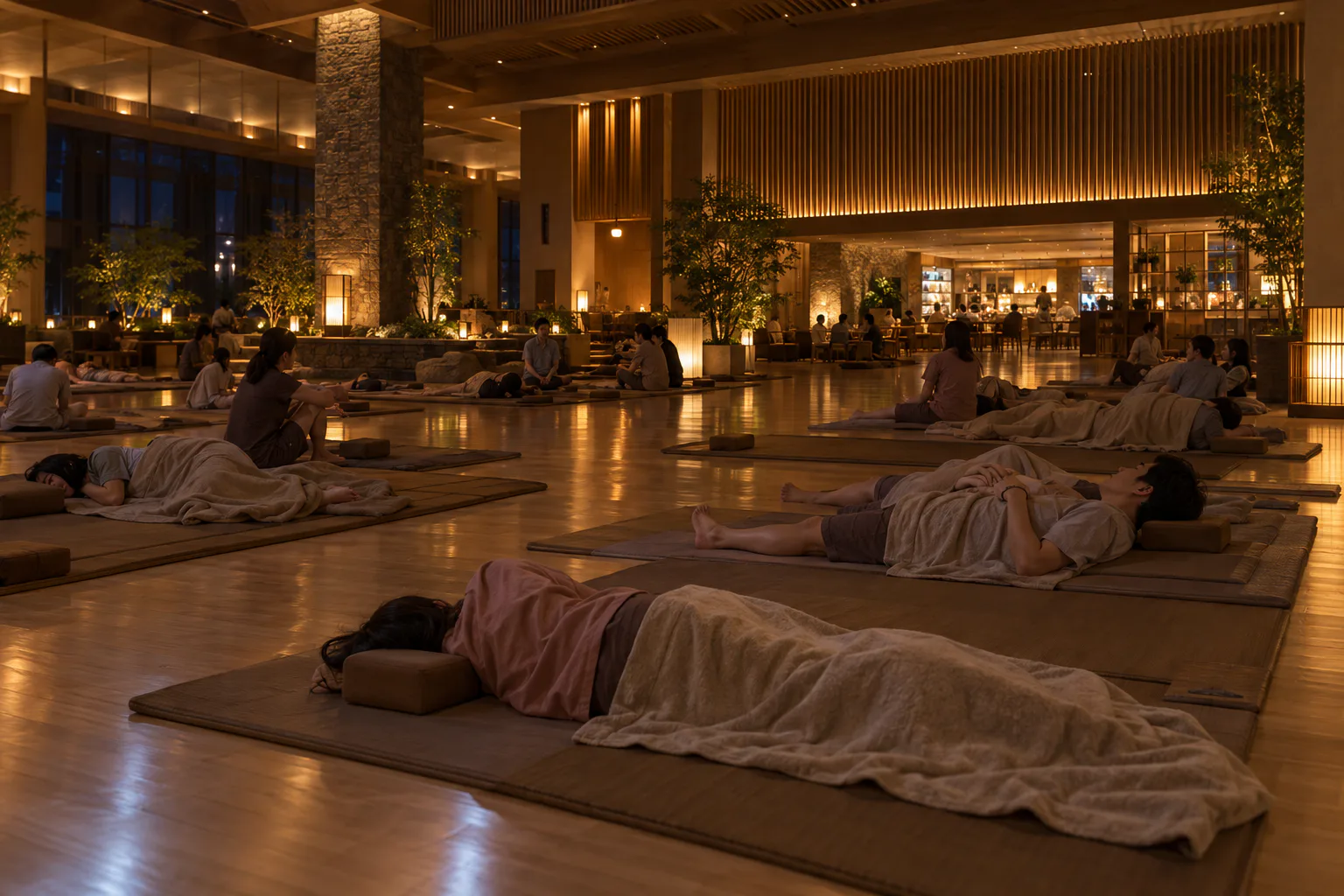
Check the venue’s closing time and permitted stay before planning an evening rest.
10. Settle your bill before collecting your shoes
Allow time to return to the changing area, shower if needed, dry off and get dressed. Collect everything from your clothing locker and return used clothing and towels where staff indicate.
At the payment station or reception desk, check your recorded purchases and any extra-time charge. Settle the balance and return or use the key according to the exit procedure.
At AQUAFIELD, even visitors with no extra purchases must complete checkout so their time can be checked; shoe lockers will not release before settlement. Checkout also ends admission, so finish your visit before settling the bill.
If a charge looks unfamiliar, ask staff to explain it before leaving. If you have lost your key, tell them immediately so they can help with the locker and payment process.
A simple plan for your first visit
Choose a venue whose facilities and ticket you understand. Travel with a small bag, check in, store your shoes and belongings, then take your time through the areas you actually want to use. Have a wash or soak, change for the common lounge, try a comfortable heated room, and leave room for a relaxed break.
Keep an eye on your ticket’s time allowance and give yourself time to change and check out. You do not need to copy every ritual you have seen on television. Understanding the spaces, respecting privacy and enjoying the visit at your own pace is enough.