The first housing question in Korea is often surprising: how much money can you put down before you move in? A familiar monthly rent exists, but so does jeonse, a contract built around a much larger refundable deposit and generally no monthly rent. For your first weeks, a guesthouse, hotel, motel or tiny goshiwon room may give you time to choose a neighborhood before committing to a lease.
These are different products, not a ladder from “bad” to “good.” A short stay buys flexibility; a private rental buys space and stability; jeonse ties up a large amount of money and requires careful checks on whether it will be returned. The right choice depends on your length of stay, cash available now, job, and comfort with the contract.
Wolse: a deposit plus monthly rent
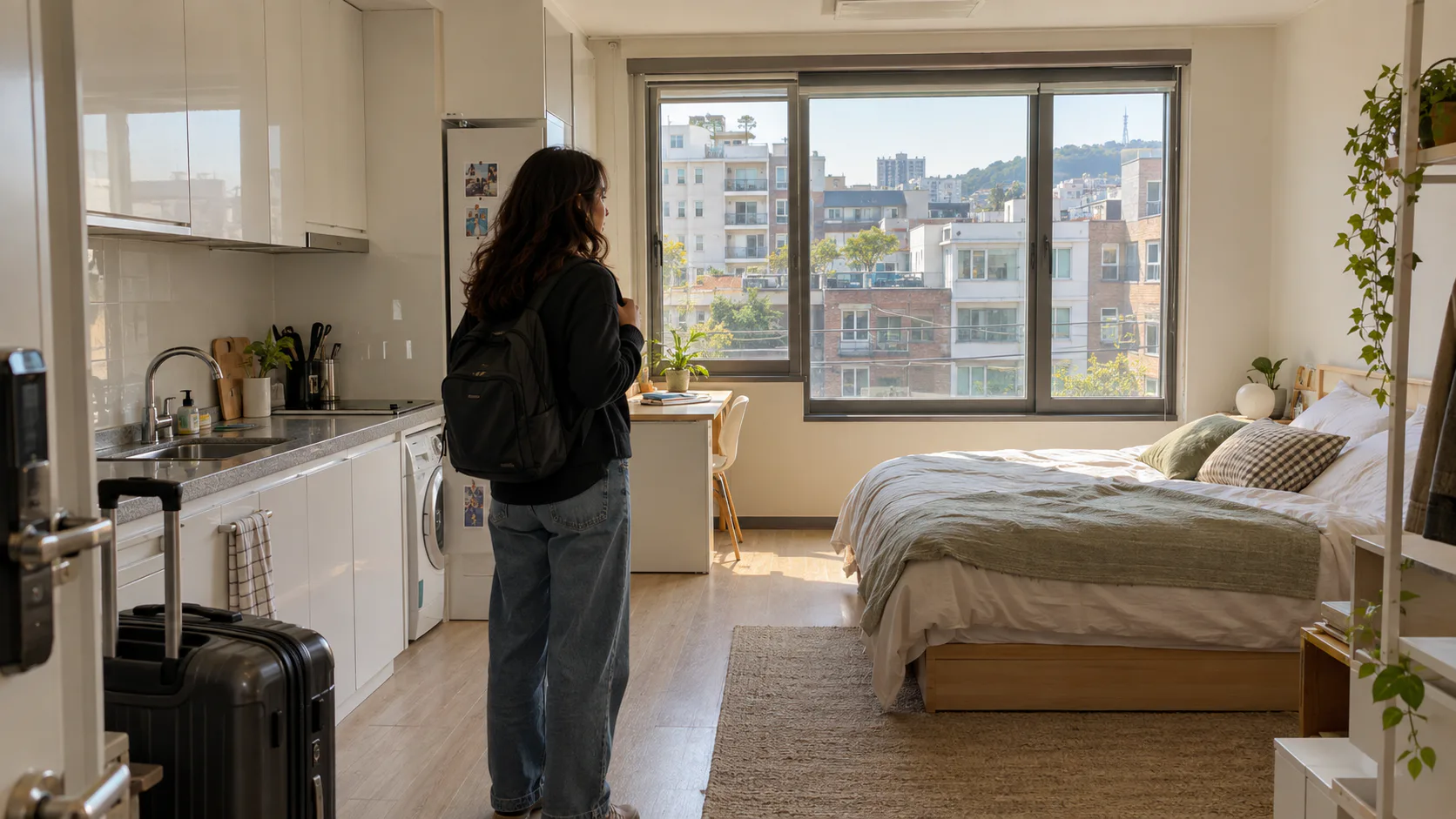
With wolse (월세), you pay a security deposit, then rent each month. For example, if a listing says 1,000/70, it commonly means a deposit of KRW 10 million and monthly rent of KRW 700,000; this is an illustration of listing notation, not a market quote. Check the listing’s unit and whether management fees (gwanribi) and utilities are extra. The deposit is normally returned at the end, subject to any legitimate unpaid rent or charges and the contract terms. For the same home, a smaller deposit may mean higher monthly rent, while a larger deposit may lower it, if the landlord agrees. The change is negotiable, not a universal formula. Ask for a written quote for each deposit option and compare the rent, management fee, utilities and cash you must tie up.
For a point of reference, a newly released analysis of August 2026 Seoul transactions for multi-family or row-house studios of 33 m² or less reported KRW 670,000 average monthly rent when converted to a KRW 10 million deposit. The analysts converted transactions with different deposits to the same KRW 10 million basis using a rent-conversion rate; this does not mean the homes actually rented for KRW 10 million down and KRW 670,000 a month. The monthly-rent sample included transactions with deposits under KRW 100 million. This is a measured Seoul-wide average for one home type and one month, not a quote for a particular neighborhood or a price ceiling. More sought-after districts can be substantially dearer: Yongsan’s August average in the same analysis was KRW 1.16 million on that standardized basis, influenced by a cluster of expensive new-studio transactions. Other districts can be cheaper, and an officetel, apartment, larger home or furnished studio may have different costs. The analysis also reported an average jeonse deposit of KRW 222.28 million from a separate set of jeonse transactions; it is not the jeonse price of the very same rental home. Search recent comparable transactions in your intended neighborhood and compare total monthly outlay and upfront cash before setting a budget.

Seoul is generally costlier than many other cities, but a clean city-to-city comparison must use the same group and period. A National Assembly Budget Office table based on 2024 statistics for residents aged 19–34 paying rent without a deposit reports these average monthly payments:
City Monthly payment in this specific group
Seoul KRW 630,000
Busan KRW 420,000
Daegu KRW 360,000
This group excludes typical deposit-plus-rent wolse contracts. It is a limited regional illustration, not a current asking price, a typical deposit or a budget recommendation for a studio. The narrow Seoul studio transaction figure above uses a different period, housing type and deposit assumption and should not be compared directly with this table. Within each city, neighborhood and deposit terms can matter more than the city average.
Jeonse: large deposit, little or no monthly rent
Under jeonse (전세), a tenant pays a large lump sum at the start, lives in the home during the contract term and expects the landlord to return the deposit at the end. That explains the appeal if you have substantial savings and expect to stay: there may be no monthly rent. It also explains the obstacle for many newcomers: a deposit can run into tens or hundreds of millions of won, and financing is not automatic for a foreign resident.
Why would a landlord offer this? The landlord has the use of a large deposit during the lease term. From the tenant’s side, the monthly cash outflow can be lower, but the return of the deposit depends on the property’s financial position and the landlord’s ability to repay. Jeonse is not automatically the best option simply because you can afford it. Supply, loan conditions and deposit safety vary by neighborhood and property.
Jeonse fraud and deposit non-return are real risks. Work with a registered real estate agent (gongin junggaesa, 공인중개사) and check the agent’s registration, but do not treat an agent’s presence as a guarantee that the deposit is safe. Before signing or sending money, ask the agent to explain the property register and confirm that the named owner is the person entitled to lease the home. Review mortgages, other claims and, where relevant, other tenants’ deposits that could have priority over yours. Compare the deposit with a realistic property value and check the building’s legal residential use. HUG’s Safe Jeonse service offers property and agent information and a contract-stage checklist; a trusted multilingual agent or independent adviser can help when the Korean documents are unclear.
Ask before committing whether this particular home and your circumstances qualify for a deposit-return guarantee, what it covers and when to apply. HUG says foreign tenants can be eligible if the product’s conditions are met; a listing or verbal promise of eligibility is not approval. Check the property register again before paying the final balance, use a traceable payment to the verified recipient, and keep the signed contract and receipts. Complete the address reporting and fixed-date steps that apply to your immigration and lease situation promptly. These checks reduce risk, but they cannot promise that every deposit will be recovered.
Goshiwon: a tiny room for a modest commitment
A goshiwon (고시원) or gositel is typically a small single-person room, sometimes with a shared kitchen, laundry or bathroom. The arrangement can be easier to start and shorter than a conventional apartment lease, but rooms, windows, ventilation, fire exits, sound insulation, deposits and fees vary enormously. Visit in person, check the actual room and building, and confirm whether your stay can be used for the address paperwork you need. Its lower entry cost may be worth the trade-off while you learn the city; it may feel cramped for longer stays.
Guesthouse: a soft landing
Guesthouses offer dorm beds or private rooms, shared areas and a chance to meet other travelers. You can book a few nights while visiting neighborhoods and comparing contracts. Privacy and quiet can be limited, and a nightly rate can become expensive over a month. Confirm the cancellation terms, luggage storage and whether a longer stay is allowed. Korea Tourism Organization describes guesthouses as a varied, often less expensive short-stay option, including female-only and private-room choices.
Motel: a practical short stay, with variation
In Korea, motel does not necessarily mean a poor or unsafe room. Many function as ordinary, centrally located budget accommodation; some are renovated and well equipped. Quality still varies by property. Check recent reviews, registration, location, room photos, cleanliness, security and the total price before booking. A motel can be useful for a few nights between leases, but do not assume a standard nightly room is suitable or available for a long-term residential address. KTO’s Korea Quality program even lists certified motels, a reminder to judge the actual property rather than its label.
Hotel: predictable service, often a higher running cost
A hotel or serviced business hotel may be the easiest arrival option: a private room, a clear booking process and staff who can help with immediate questions. Prices span budget business hotels through luxury hotels, and location or holidays can change the nightly rate sharply. Compare the total cost of a two-week stay with a studio deposit and first month of rent. For a temporary base it can be excellent; as permanent housing it can be costly.
When an employer provides housing
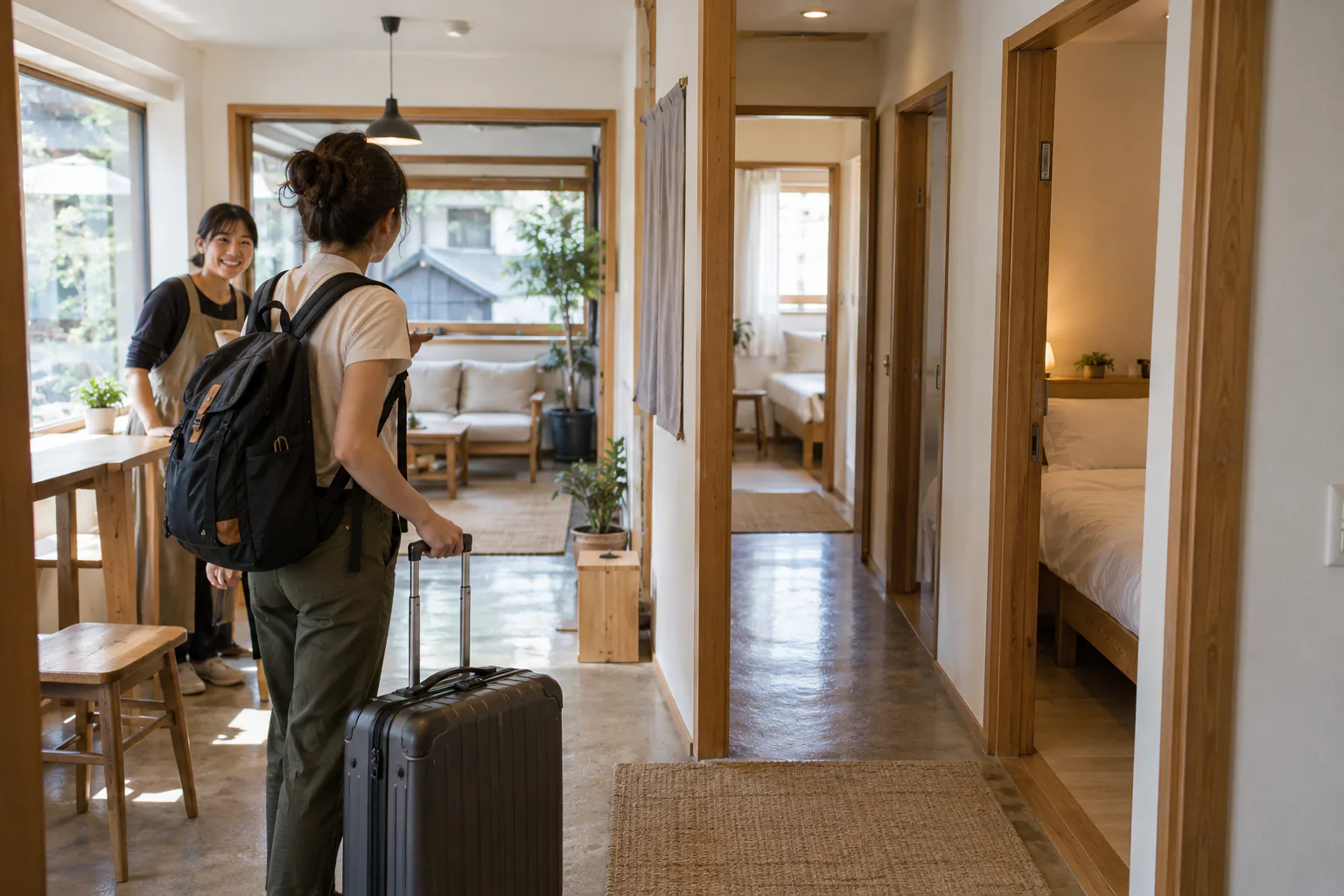
Some jobs include a room, a company lease, a housing allowance or help finding a rental. The words “housing provided” are not enough. Ask for the actual address or room standard, whether the place is shared, who pays the deposit, utilities and management fees, whether an allowance is paid in cash, and what happens to the housing if employment ends. Put those points in the written offer or contract. A free room can change the value of a job offer dramatically; a poor room or unexpected deductions can change it in the other direction.
A sensible arrival sequence
Book a verified short stay first if you have not seen the neighborhoods. Visit potential homes in daylight, calculate the deposit + monthly rent + management fee + utilities + brokerage cost, then have the contract and property checked before transferring a deposit. Check the dates on which the balance is due and the deposit should be returned. For jeonse, check the return-guarantee route before treating a large deposit as safe. Ask for help from a certified multilingual agent or a foreign resident center when the contract is unclear.
The best housing decision is the one whose space, monthly costs and deposit risk you understand. Korea offers more choices than a simple apartment-or-hotel decision, and those choices let you move in stages as you learn where you want to live.