Your first subway journey in Korea usually comes down to a few unfamiliar details. Does buying a transit card include travel credit? Why does the platform show a station name that is not your destination? Should you leave through the ticket gates to change lines?
You can navigate Seoul’s subway using English signs, route information and station announcements. The useful preparation is knowing what to check at each stage of the journey.
This guide follows a trip from buying your card to finding your street exit. It focuses on Seoul and the surrounding metropolitan network. The same approach helps in other Korean cities, but fares, tickets and local rules can differ.
Your first ride, at a glance
Buy a transit card and add travel credit.
Find a route to your actual destination, including the final walk.
Tap into the station and follow your line’s signs.
Check the direction, train destination and stopping pattern.
Board, watch for your stop and follow transfer signs if needed.
Tap out with the same card and use the recommended street exit.
1. Buy a transit card—and add money to it
For a first visit involving several journeys, a physical Tmoney card is a straightforward option. It stores prepaid credit that is deducted as you travel. EZL is another widely used transit-card option.
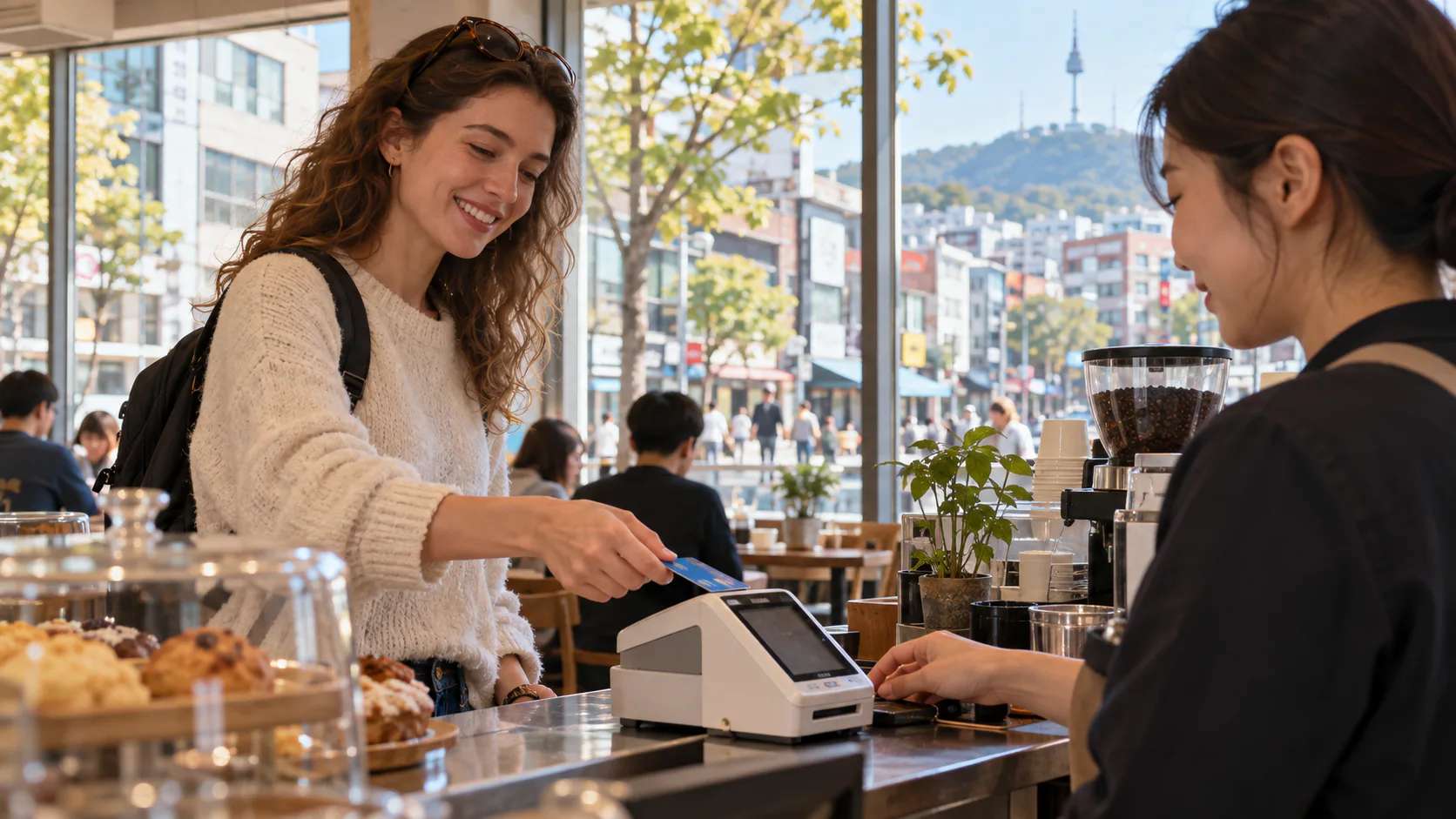
You can buy these cards at participating convenience stores, including CU, GS25 and 7-Eleven. Airport convenience stores can be a useful first stop if you want a card before continuing into the city. Availability and designs vary by shop.
The card itself and the travel balance are separate purchases. A standard Tmoney card generally costs around ₩3,000–₩5,000, according to the Korea Tourism Organization’s card guide. Special designs may cost more.
If you choose a standard card in that price range and add ₩20,000 of credit, your starting payment would be roughly ₩23,000–₩25,000. The ₩20,000 is the part available for travel; the card’s purchase price is not.
Ask the cashier for a Tmoney card and a top-up in the same transaction. Prepare Korean-won cash for the purchase and loading process. Each person travelling through subway gates needs their own card.
What about a tourist pass?
A short-term Climate Card pass may suit a busy itinerary within its covered area. A pay-as-you-go card is more flexible if your plans extend beyond that area. Before choosing a pass, compare your actual routes against Seoul’s current coverage guide; do not assume that every line on the metropolitan map is included.
2. Top up before your balance gets low
You can add credit at a participating convenience store or a station’s transit-card recharge machine. Keep some Korean-won cash available: overseas bank cards are not a universal payment method for loading a standard physical Tmoney card.
At a convenience store
Tell the cashier how much credit you want to add, give them the cash and place your transit card where they indicate. Check that the top-up is complete before taking your card away.
At a station machine
Select English on a machine offering a language menu.
Choose the transit-card recharge option and place your card on the marked reader.
Select an amount and pay using a method the machine accepts.
Leave the card in place until the completion message appears.
Take your card, any change and your receipt if requested.
Check your balance when you recharge or pass through a gate. Keep enough for more than a single base fare, especially before a longer trip.
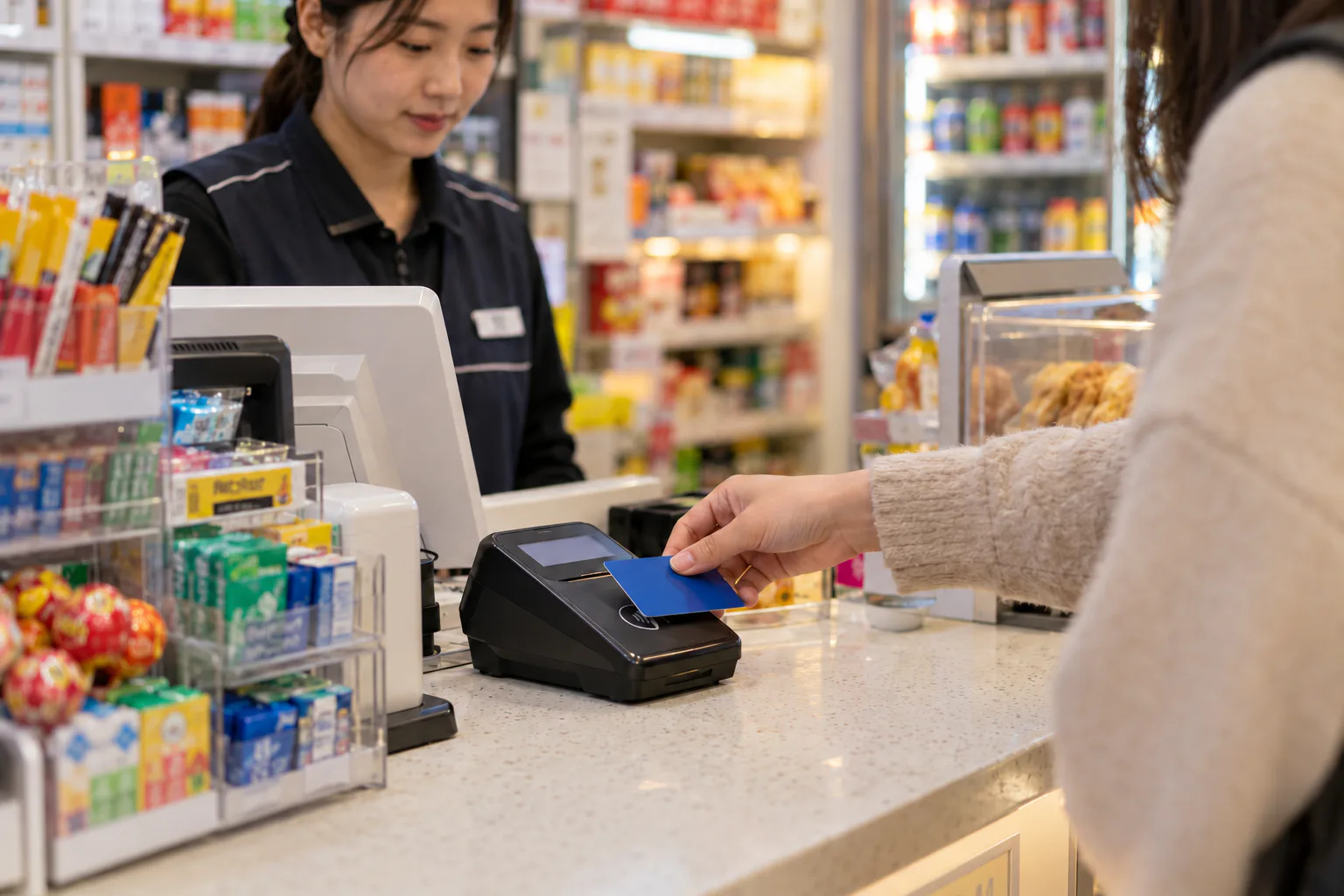
Add travel credit after buying your card; the card price and usable balance are separate.
Can I use my overseas Visa or Mastercard?
Paying at a ticket machine is different from tapping a bank card at a fare gate. Selected new machines on Seoul Subway Lines 1–8 accept overseas credit and debit cards for single-journey tickets and short-term Climate Card purchases or loading. Seoul’s March 2026 announcement lists an average service fee of about 3.7% for those overseas-card payments.
This does not mean you can assume your overseas bank card will work directly at subway gates, or that the same machine can load a standard Tmoney balance with it. The official visitor transport payment guide distinguishes these services.
3. Know the fare basics—or buy a single-journey ticket
As checked in October 2026, the standard adult base fare on the Seoul metropolitan subway is ₩1,550 with a transit card for a journey within 10 km. Longer journeys cost more, and some services, including the Shinbundang Line, have separate additional charges. See the city’s fare table for current rates.
If you only need one ride, select your destination at a station ticket machine and buy a single-journey ticket. For a standard adult journey within the base-fare distance, the fare is ₩1,650. Seoul’s reusable single-journey card also requires a ₩500 refundable deposit, making the initial payment ₩2,150.
Use that card to enter and exit, then insert it into a deposit-refund machine outside the destination’s gates to recover the ₩500. It is a subway ticket, not a bus ticket. The city’s public transport guide explains the deposit system.
Travelling with children or teenagers? Ask about age-appropriate tickets or discount registration when buying their cards. A standard adult card will not automatically identify a younger passenger.
4. Plan the complete journey, including the street exit
Start with your hotel, restaurant or attraction, rather than guessing which station is closest. A nearby station can still involve an awkward walk, a large road crossing or a long passage inside the station.
NAVER Map’s mobile app supports English and combines public transport directions with the walking sections of a trip. NAVER provides an official guide for international visitors. A subway-specific app is also useful for viewing the rail network.
After choosing public transport directions, open the route details. Check your boarding station, line, direction, transfer station and destination exit. If you have luggage, compare walking and transfer distances rather than choosing a route only because it saves a minute.
A screenshot of the route is a useful backup. Include the transfer details and the destination exit, not just the total travel time.
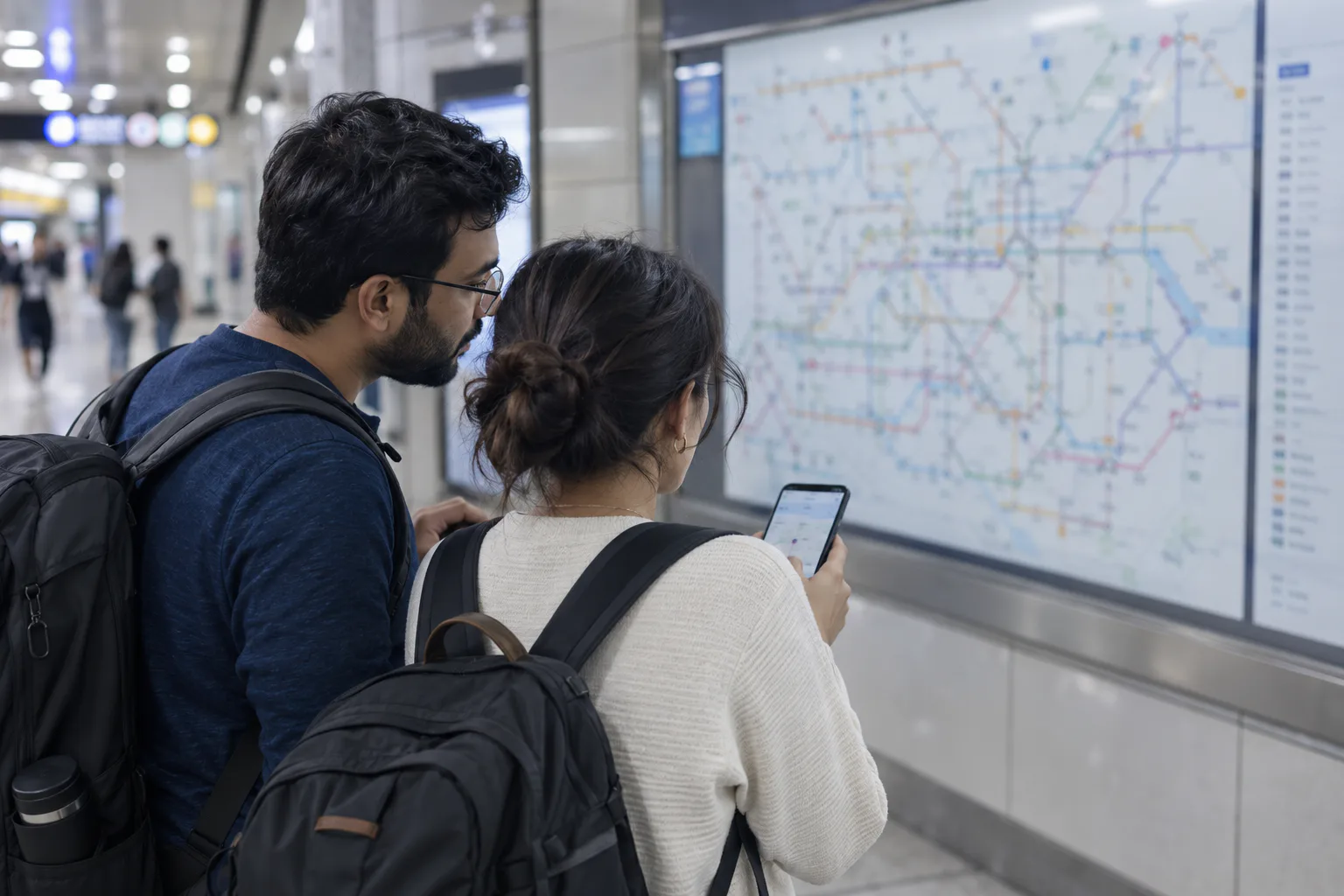
Check the line, direction and transfer details before heading to the platform.
How to read the subway map
Use the line number or name together with its colour. Trace that line from your starting station to your destination. If the route changes colour at a marked interchange, that is where you change lines. Two lines crossing on a drawing do not necessarily mean there is a transfer between them.
The network map shows rail connections, not an accurate street layout. Stations that look close together on it may not be close on foot. Use the street map for the final walk.
For a current network map, use your app or the map resources linked from Visit Seoul’s subway guide, rather than an old image saved from an unrelated travel post.
5. Enter through the gates with one card
At the station entrance, check that you are entering the station and line shown in your route. In a large interchange, a convenient-looking entrance may lead to a longer underground walk.
At the fare gate, hold your transit card against the marked reader. Wait for the successful response and follow the gate’s indication before moving through. Some gate designs look different, but the reader is marked.
Take the card out of a wallet containing other contactless cards if you encounter a reading error. Keep it accessible: you need the same card to tap out at your destination.
If your card is rejected, read the display and move aside if possible. Use the help button or ask station staff rather than repeatedly tapping or following another passenger through.
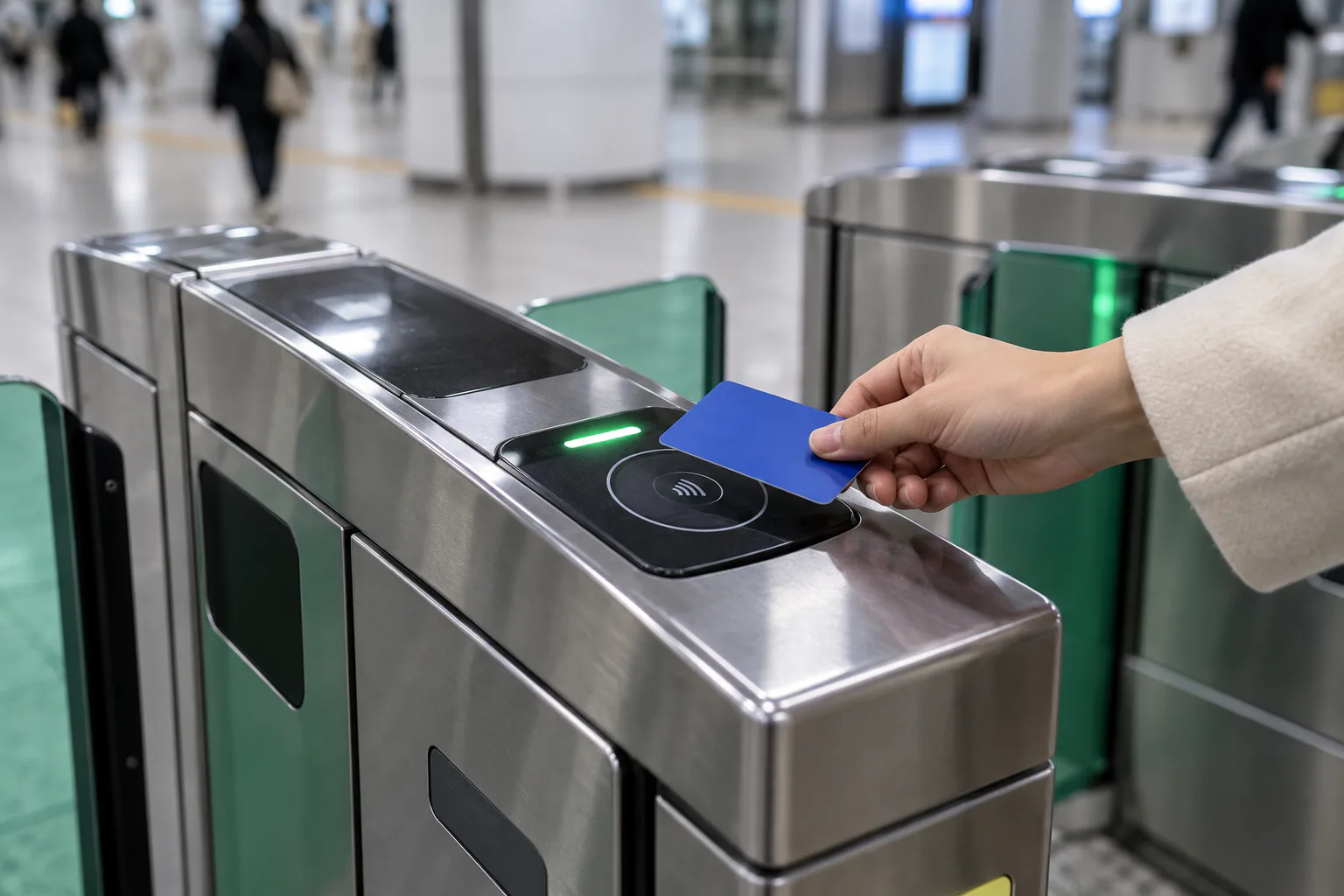
Use one card to enter, and keep the same card ready to tap out.
6. Find the right platform—and check the actual train
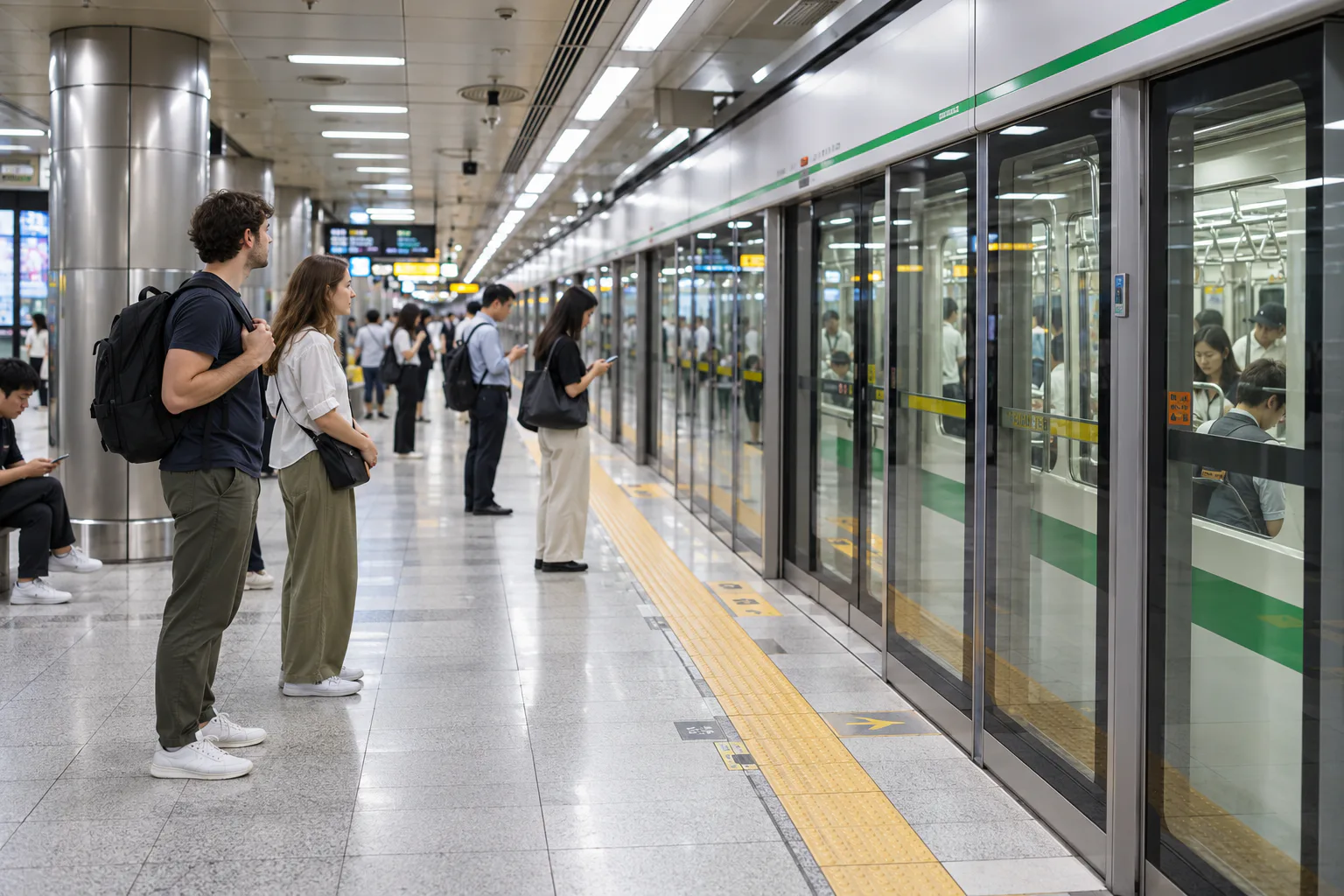
Follow the signs for your line, then check the direction before boarding. A platform may be labelled with a major station or the end of the line, even when you are getting off much earlier.
The train’s displayed destination does not have to match your stop. It must travel through your stop.
A practical direction check is to compare the next station in your app with the next-station information on the platform. For example, travelling from Seoul Station to Myeong-dong on Line 4, you want the direction through Hoehyeon, followed by Myeong-dong.
Then check the approaching train’s destination. Some trains finish earlier than others or use different branches. Being on the correct line and facing the correct direction is not always enough for a long journey.
Local or express?
On lines offering express services, an express train skips some stations. Check whether your stop is served before boarding. If your chosen route uses a local train, do not switch to an express simply because it arrives first.
On Line 2’s circular section, either direction may eventually reach a station, but one can involve a much longer trip. Follow the direction selected by your route planner rather than relying on the fact that it is the right line.
Wait beside the doors, let passengers leave, then board. If the doors are closing, take the next train.
7. On board, use the English announcement and the display together
Regular station announcements in Seoul include English. Listen for your stop, and compare it with the English station name on the onboard display or the platform signs when the train arrives.
The announcement may also list connecting lines or places reached by transferring. Hearing a familiar place name in the transfer information does not mean you have arrived there. Check which station the train is actually approaching.
You do not need to memorise the announcement wording. Keep your route open and become ready to leave when the train approaches your stop. Door-side announcements and indicators help you move to the correct side of the carriage.
If you miss the audio, use the display. If you miss the stop, stay calm and get off at the next suitable station to replan the journey.
8. To change lines, follow Transfer—not Exit
At your interchange, get off and follow signs for the next line. For a normal internal subway transfer, continue along the connecting route rather than following street-exit signs.
Some transfers involve long corridors, stairs or several levels. Keep following the next line’s number or name. When you reach its platforms, check the direction again; reaching the correct line does not automatically put you on the correct side.
Some connections have an additional gate or a separate-fare boundary. If the marked transfer route leads through a reader, follow the instructions there. A gate within a connecting route does not automatically mean you took a wrong turn.
With a regular transit card, your total charge depends on the journey and the services used. Changing trains does not always mean paying a fresh base fare, but it also does not guarantee there will be no additional charge.
Continuing by bus?
Use the same card and tap when entering and leaving each service. Metropolitan transfer discounts have timing and route conditions; do not assume the next ride is simply free. Seoul’s transfer rules generally allow 30 minutes after alighting, extended to 60 minutes during the specified overnight period.
9. Tap out, then find the correct numbered exit
At your destination, follow the exit signs and tap out with the card you used to enter. If you used a single-journey deposit card, return it to a refund machine after passing through the gates.
Next, follow the numbered street exit recommended by your route. Exit numbers are separate from line numbers. Arriving on Line 4 does not mean you should use Exit 4.
Check the local area map before going upstairs if you are unsure. At a large junction, choosing the wrong exit can leave you on the opposite side of a busy road.
For a suitcase, stroller or wheelchair, look for the elevator route. The nearest numbered exit and the accessible exit may be different. Once outside, check your walking route again.
10. At the airport, choose the right AREX service
The Airport Railroad has two different services. Make this choice before buying a ticket or entering a gate.
All-Stop Train: calls at intermediate stations, including Hongik University and Gongdeok. It accepts supported regular transit cards and connects with the metropolitan rail network.
Express Train: links Seoul Station and the Incheon Airport terminals without intermediate city stops. It has reserved seating and requires a separate Express ticket.
If your hotel is near an intermediate station, taking the Express to Seoul Station could mean travelling past a more convenient connection. Compare the complete route to your accommodation.
The official AREX service guide explains the distinction. Do not treat AREX Express tickets as interchangeable with local subway express services.
11. Fix common mistakes without starting the trip over
You boarded in the wrong direction
Get off at the next suitable station and check the return route. Before leaving the paid area, see whether signs lead to the opposite platform. Station layouts vary; if you cannot find the connection, ask staff before exiting.
You cannot tap out
Check whether you are using the same card, then read the gate message. You may need to add credit or have staff resolve an entry-record issue. Use the gate’s help button rather than forcing your way through.
The train ends before your destination
Leave the train when instructed and check the next service in your app. Follow staff or onboard directions about continuing; do not assume that every train on a line runs its full length.
You are travelling late
Check the last complete journey to your destination, including transfers. A train may still be running from your station after the final connection you need has ended. Recheck the train’s destination before boarding.
12. Make the ride easier for yourself and others
Let people off before boarding and keep the doorway clear once inside. During busy periods, hold a large backpack where it will not bump other passengers. Keep conversations and phone calls quiet, respect priority and pregnancy-designated seating, and use the elevator if luggage is difficult to manage on stairs.
For your first trip, leave a little extra time for the station itself. You may spend more time finding the correct platform or street exit than the route’s train time suggests.
Keep your card handy, check the train before boarding and follow your chosen route one stage at a time. You do not need to understand the entire network to make your next journey.