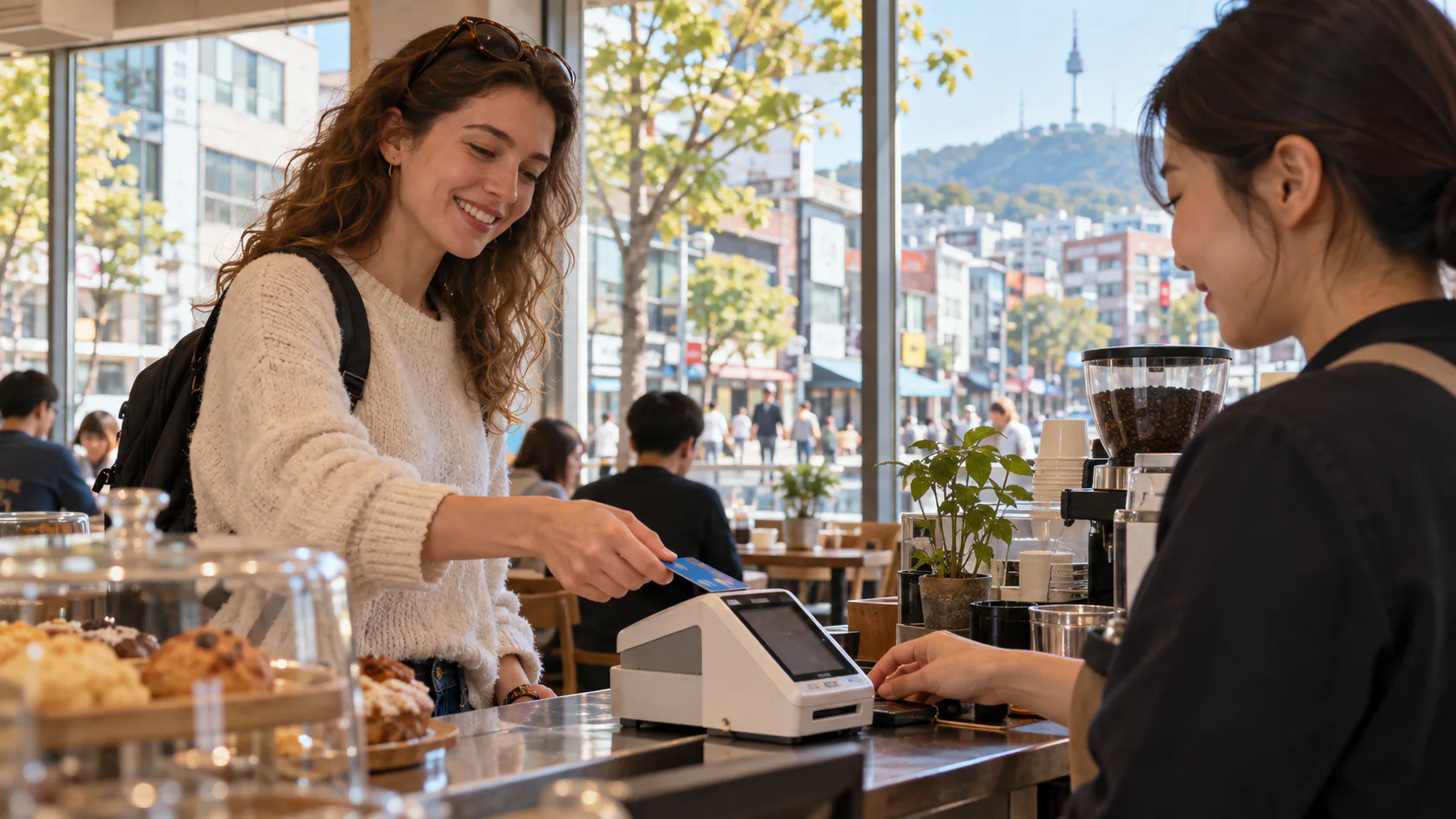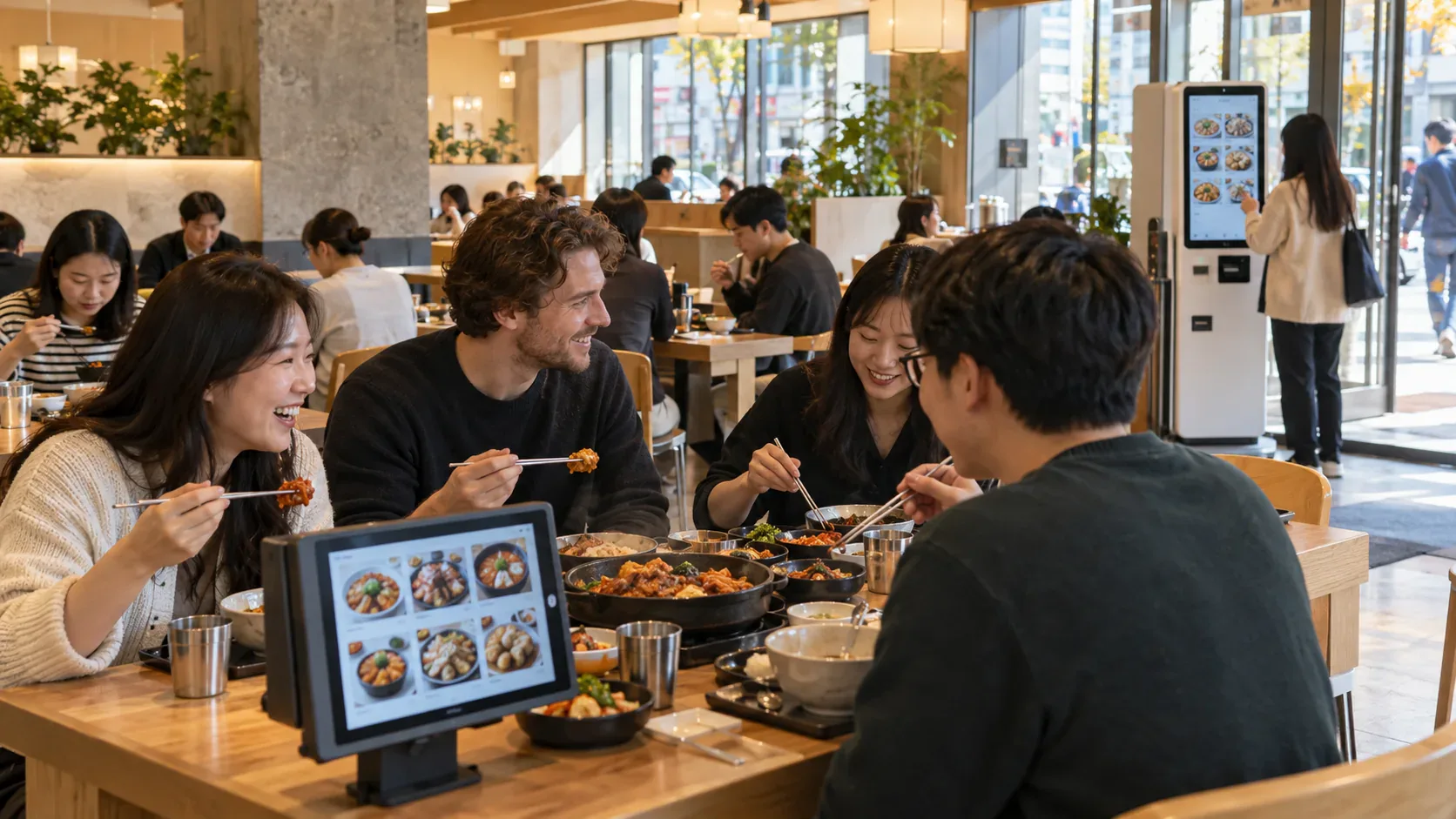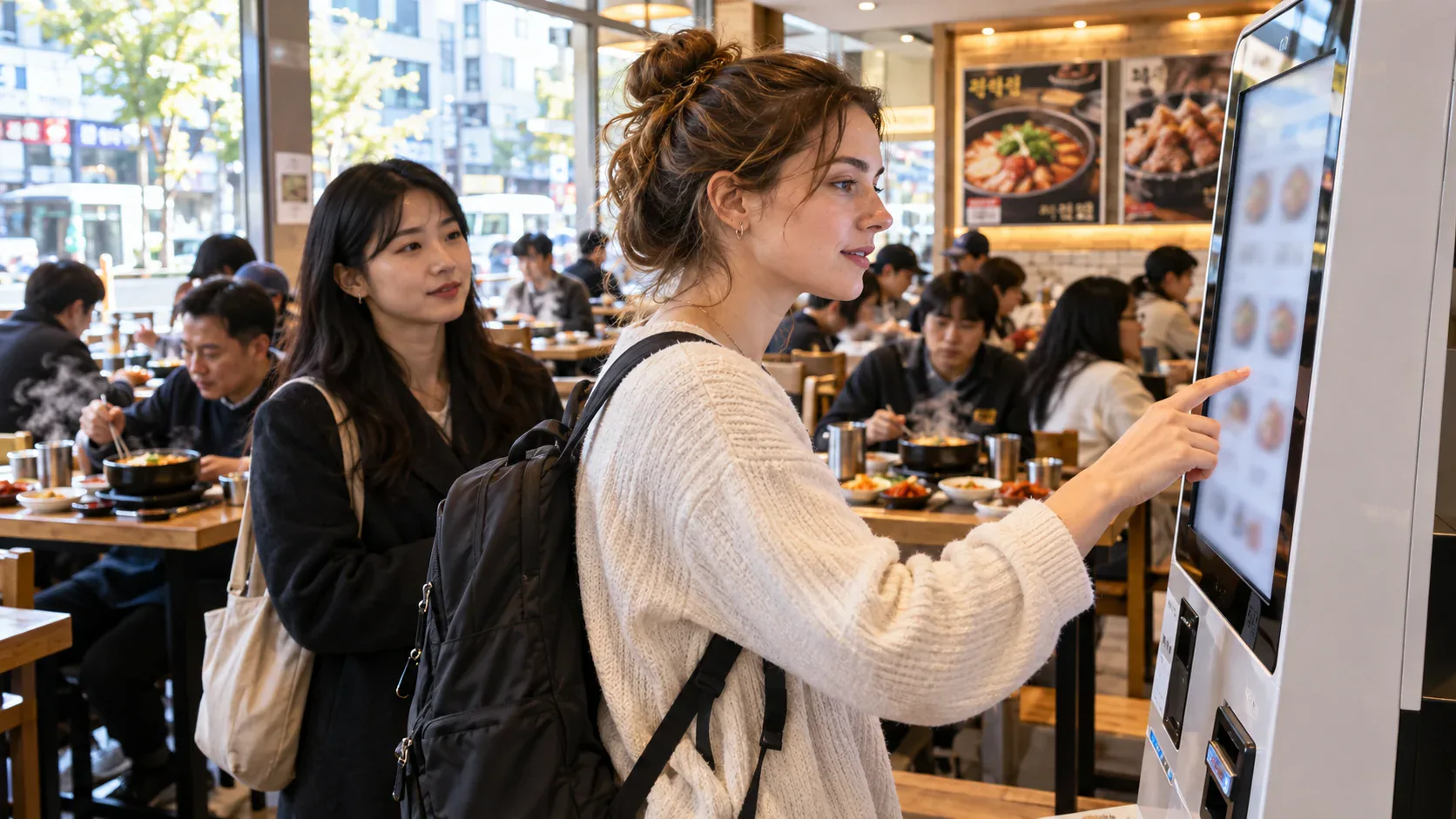
You have found a restaurant, spotted an English button on the kiosk and chosen a meal. Then the screen asks whether you are eating in or taking out. A number prints. Nobody calls your name. There is no water on the table. Did the order work?
This is a familiar kind of friction for a newcomer to Korea. The hard part is often not translating the dish name. It is understanding the small sequence around it: how to customize, how to pay, where to collect the food and what you are expected to do for yourself. Korea Tourism Organization notes that self-service water and side dishes, along with unmanned ordering machines, are increasingly common in restaurants. Each shop still has its own setup.
A Korean kiosk order, from screen to meal
First look around before you tap. Is there a table number, a pickup counter, a receipt printer, or a sign asking you to order at the counter? A tabletop tablet is different from a freestanding kiosk. If you are with a group, check whether everyone should order together or separately.
1. Choose dine-in or takeout. On many screens, 매장 means eat here; 포장 means take away. The same dish may be packed differently, so this is worth checking before payment. Some machines ask this at the start and others at checkout.
2. Pick the dish, then read the options. The picture and price may be clear, yet size, spice level, toppings, a set meal and paid extras can be on another screen. Check 수량 (quantity) before continuing. 추가 means add or extra, which may change the price; 품절 means sold out. If an option is unclear, do not guess when it affects an allergy or dietary rule.
3. Check the basket and pay. 결제 is payment. Read the item count and final amount, including any selected extras. Accepted payment methods differ by machine and restaurant; a foreign card may work at one place and fail at another. If payment fails, ask the staff whether you can pay at the counter or use a different method. Repeatedly pressing pay can create confusion about whether an order went through.
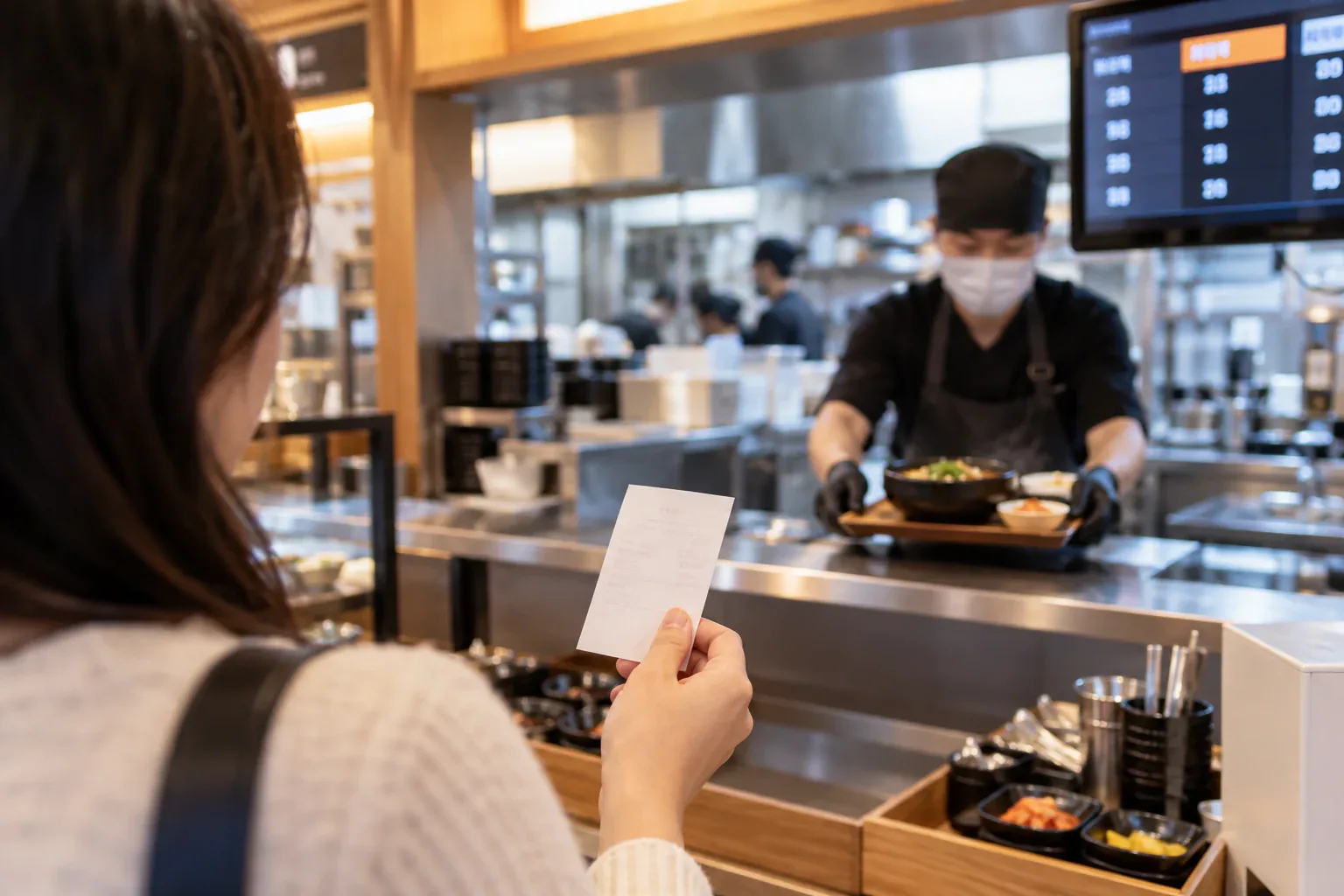
4. Keep the receipt or order number. 주문번호 is the order number. Depending on the restaurant, a screen may show it, a staff member may call it, or the food may come to the table. Look for a pickup counter and compare the number on the receipt with the display before taking a tray. If no receipt prints, check the order confirmation screen or ask.
5. Check what happens after you eat. 셀프 means self-service, 반납 means return, and 호출벨 is a call button. You might collect water, cups, napkins and cutlery yourself, refill side dishes at a designated station, or return the tray to a marked area. Follow the signs and the restaurant's practice rather than assuming one rule fits every place.
The tiny words that change the whole order
Korean on the screen What to look for Why it matters
매장 / 포장 Eat here / take out Confirms where you will eat
수량 Quantity Prevents ordering two by accident
추가 / 옵션 Add / option Toppings and sets can cost more
품절 Sold out Choose another item
결제 Payment Check the final basket first
주문번호 Order number Watch the pickup display or receipt
셀프 / 반납 Self-service / return Find the water station or tray return
An English-language screen reduces the reading burden, but it does not explain where the napkins are or whether the display at the other end of the room is calling your number. Pause for ten seconds and scan the room. You will often learn more from the signs and other diners' flow than from repeatedly reopening the menu.
The food question a screen cannot safely answer
A translated menu is not an ingredient guarantee. Korean soups and stews can contain meat or fish broth even when the photo looks vegetable-heavy. Korea Tourism Organization also cautions that seemingly vegetable-based gimbap can contain egg, ham or crab-flavored ingredients. Sauces and side dishes deserve the same attention. A photo, an icon or an automated translation cannot establish that a meal is vegan, halal, or safe for someone with a serious allergy.
If the ingredient matters, speak to a person before paying. You can show a short written request: “이 음식에 고기나 생선 육수가 들어가나요?” (“Does this contain meat or fish broth?”) or “이 재료에 알레르기가 있어요. 들어가나요?” (“I am allergic to this ingredient. Does it contain it?”). Point to the exact ingredient in Korean or a translated note. If the staff cannot confirm, choose another dish or restaurant; do not rely on removing a visible topping to solve a hidden-ingredient problem.
The same human check helps with less serious preferences: whether a dish is spicy, whether the side dishes are included, or whether a topping can be left off. Some kiosks have a notes field; others offer only fixed options. Asking a question is a normal part of ordering, even when the first screen has already done most of the work.
The other half of the meal: water, banchan and the tray
Banchan, the small side dishes served with a meal, are one of the joys of Korean dining. They can also make a first visit confusing: are you supposed to order them, wait for them, or collect them? Korea Tourism Organization describes restaurants where customers serve themselves water and side dishes. Look for a labeled station, and take modest amounts if refills are offered. What comes with a meal and how refills work depend on the restaurant.
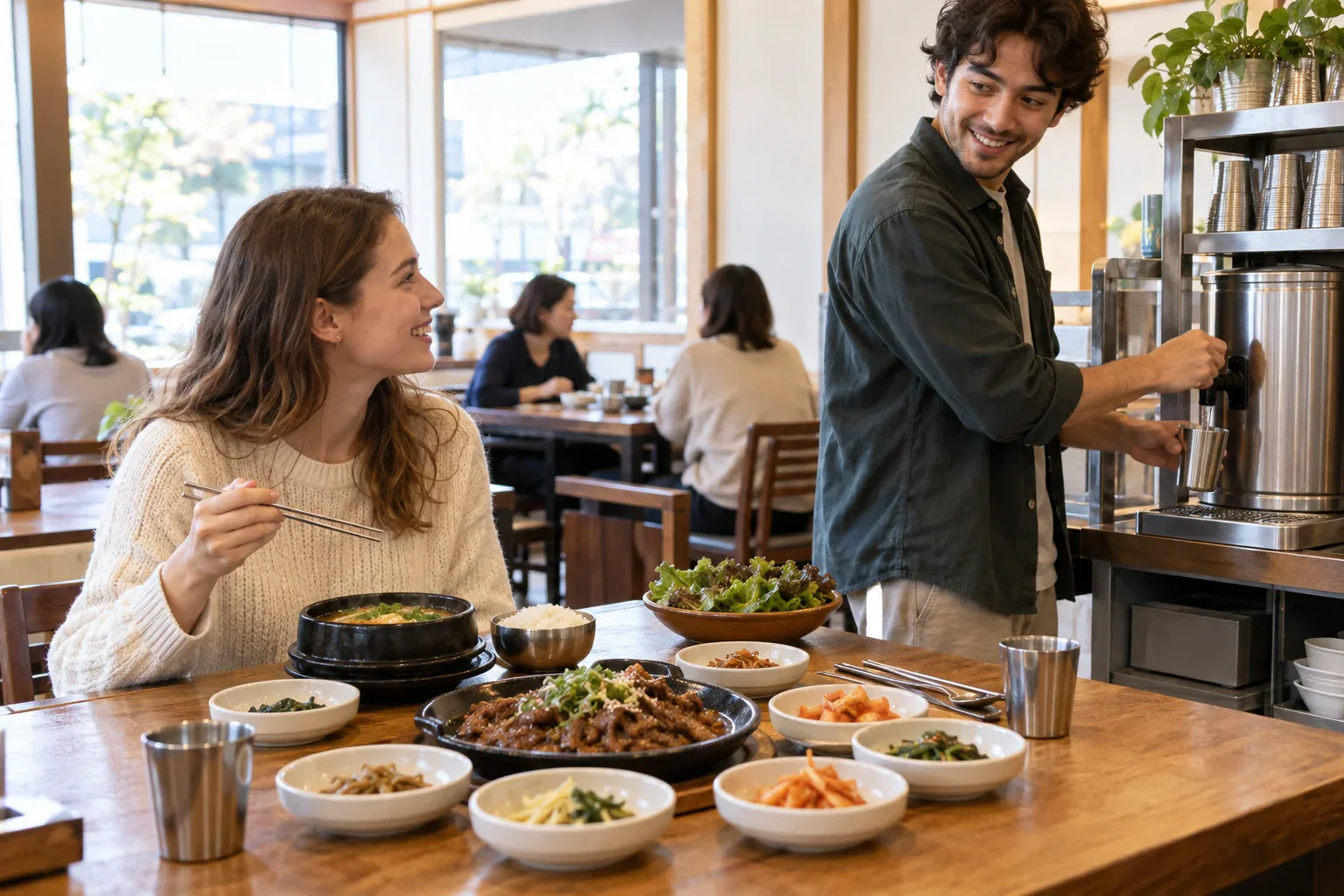
If there is no water on your table, check a dispenser near the counter. Chopsticks and spoons may be in a drawer at the side of the table. A return shelf or tray station may be near the exit. These are clues, not a universal etiquette test. When you cannot tell, a simple “물은 어디에 있어요?” (“Where is the water?”) or “여기 반납하면 되나요?” (“Should I return this here?”) is enough.
What to do when the kiosk leaves you stuck
Imagine ordering noodles for dine-in. You choose the dish, decline an extra topping, pay, then receive ticket 27. The pickup screen shows 25 and 26. You keep the ticket, collect water at the station and wait for 27 to appear. When it does, you take the meal and later return the tray where the sign says 반납. That small chain of actions is the real skill; the English button is only the opening step.
If the screen is only in Korean, use a translation app to understand the flow, then double-check item name, quantity and total. If a foreign card fails, ask before trying to submit the same basket again. If the order number never appears, show the receipt to a staff member. And if a food restriction is involved, step away from the machine and confirm the ingredients directly.
The best Korean restaurant kiosk guide is therefore less about memorizing a perfect set of buttons and more about knowing when to look around and when to ask. A kiosk can speed up an ordinary meal. It cannot replace a conversation about your health, your dietary needs or a missing order.