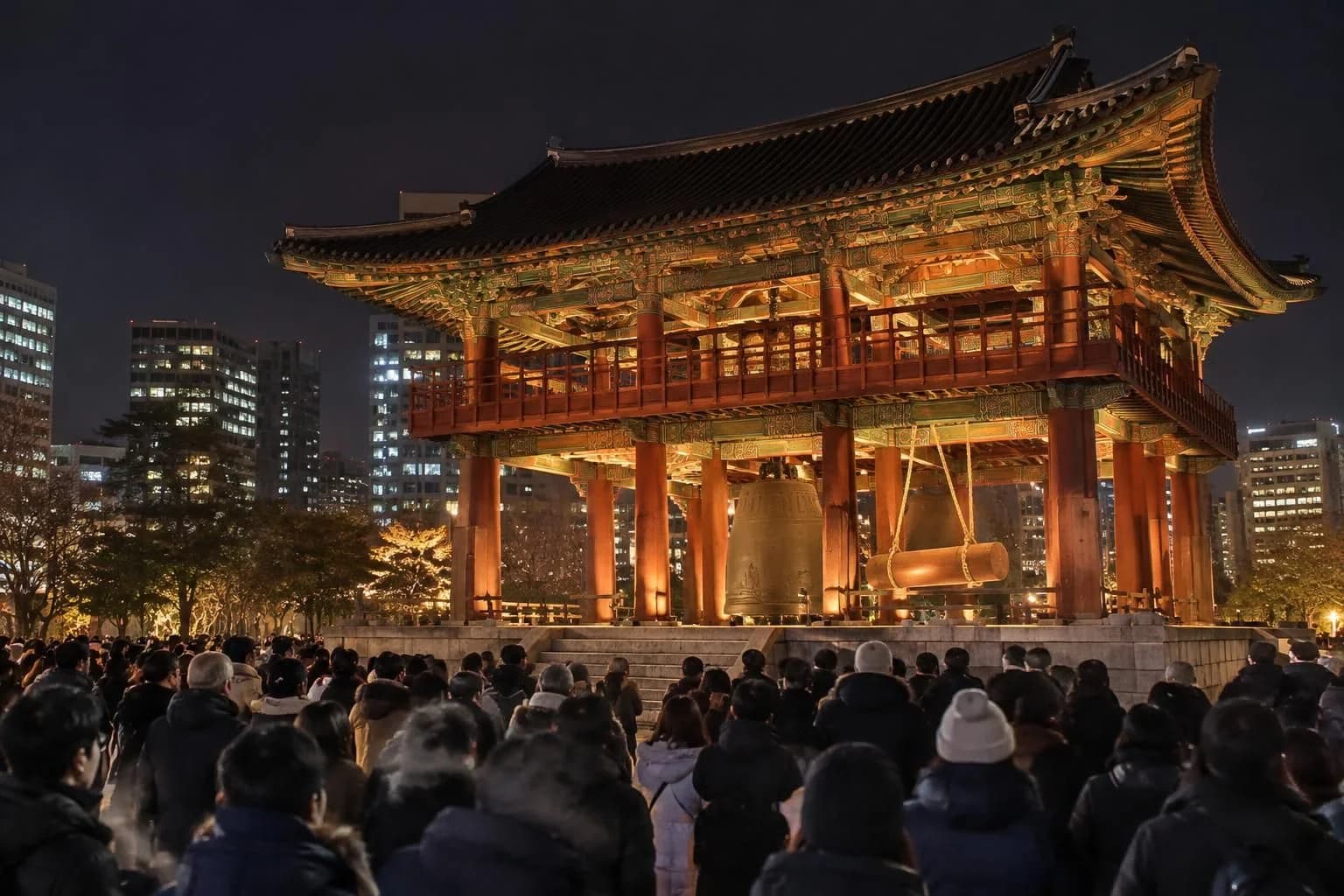
Seoul is taking public nominations through November 30 for the citizen representatives who will ring the Bosingak bell at midnight on Thursday, December 31, 2026, to welcome 2027. The city announced the call on November 3 and opened it on November 6. Anyone in Seoul can attend the bell ringing for free. The nomination itself is a Korean-language process, and the city's notice does not mention nationality. For visitors and foreign residents, the bigger question is getting home after midnight. As of November 23, we had not found a 2026 transport plan from the city. Last year's plan gives a reliable idea of what to expect.
Nominations: who qualifies and how to apply
Nominees must be people who made 2026 better. They can fall into four categories:

- people who gave the public hope
- people who shared with others or overcame hardship
- citizens whose brave acts set an example
- people who drew attention through their work in any field
To apply, open the online form linked from Seoul's nomination announcement and enter the nominee's details and your reasons. A recommendation committee will review entries in December. Selected people will be told individually, and the city will announce the results around mid-December. If you don't read Korean, a browser translation tool will help with the form. Write your nomination reasons clearly, since reviewers read them in Korean.
The bell-ringing ceremony dates back to 1953, and Seoul has picked some ringers through public nominations since 2005. Last year's 11 ringers included a volunteer who had counseled suicide-prevention callers for 25 years and a bus driver who saved a passenger with CPR. The 2023 lineup included six global influencers. There is also an English-language report on the nomination call.
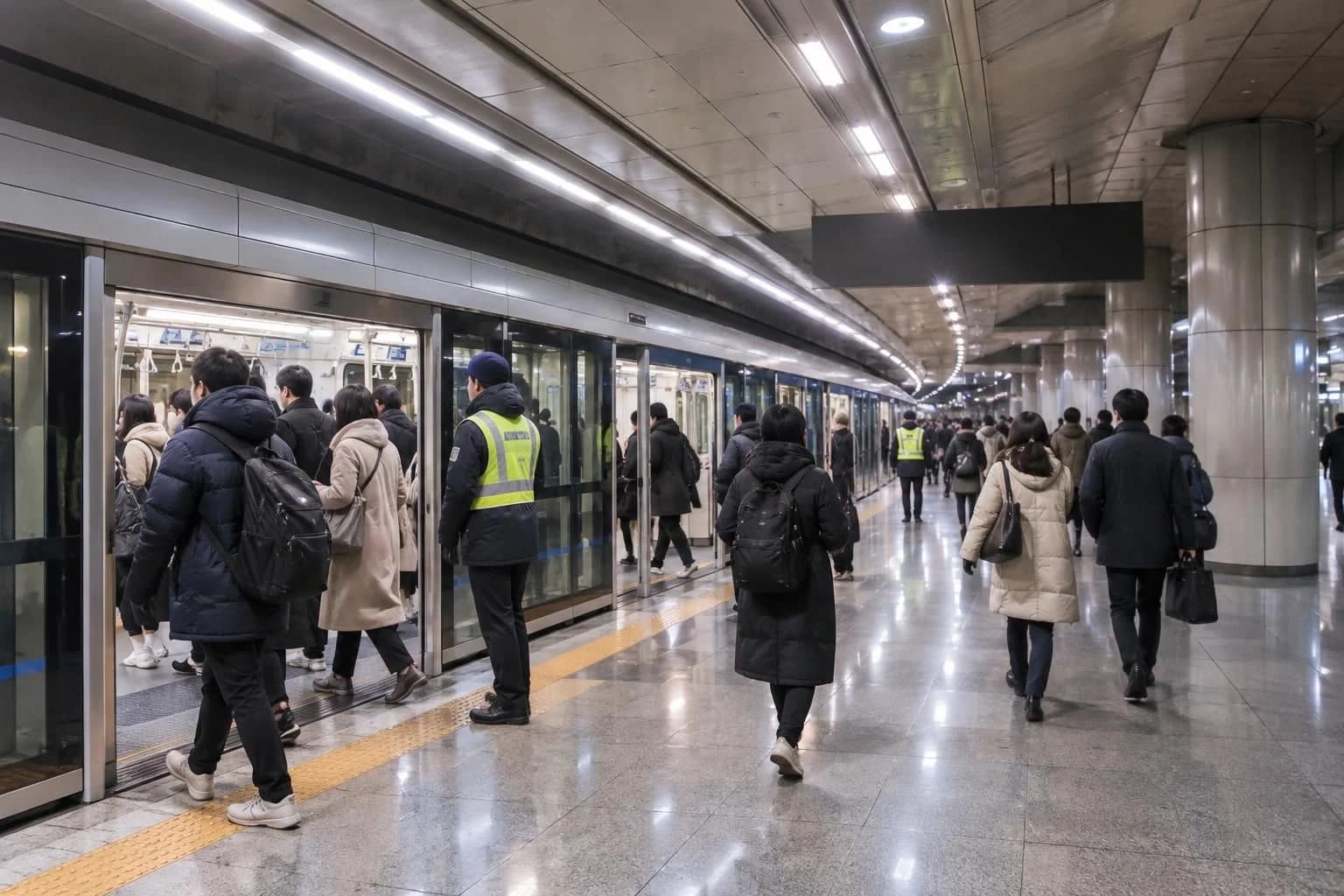
What last year's event looked like
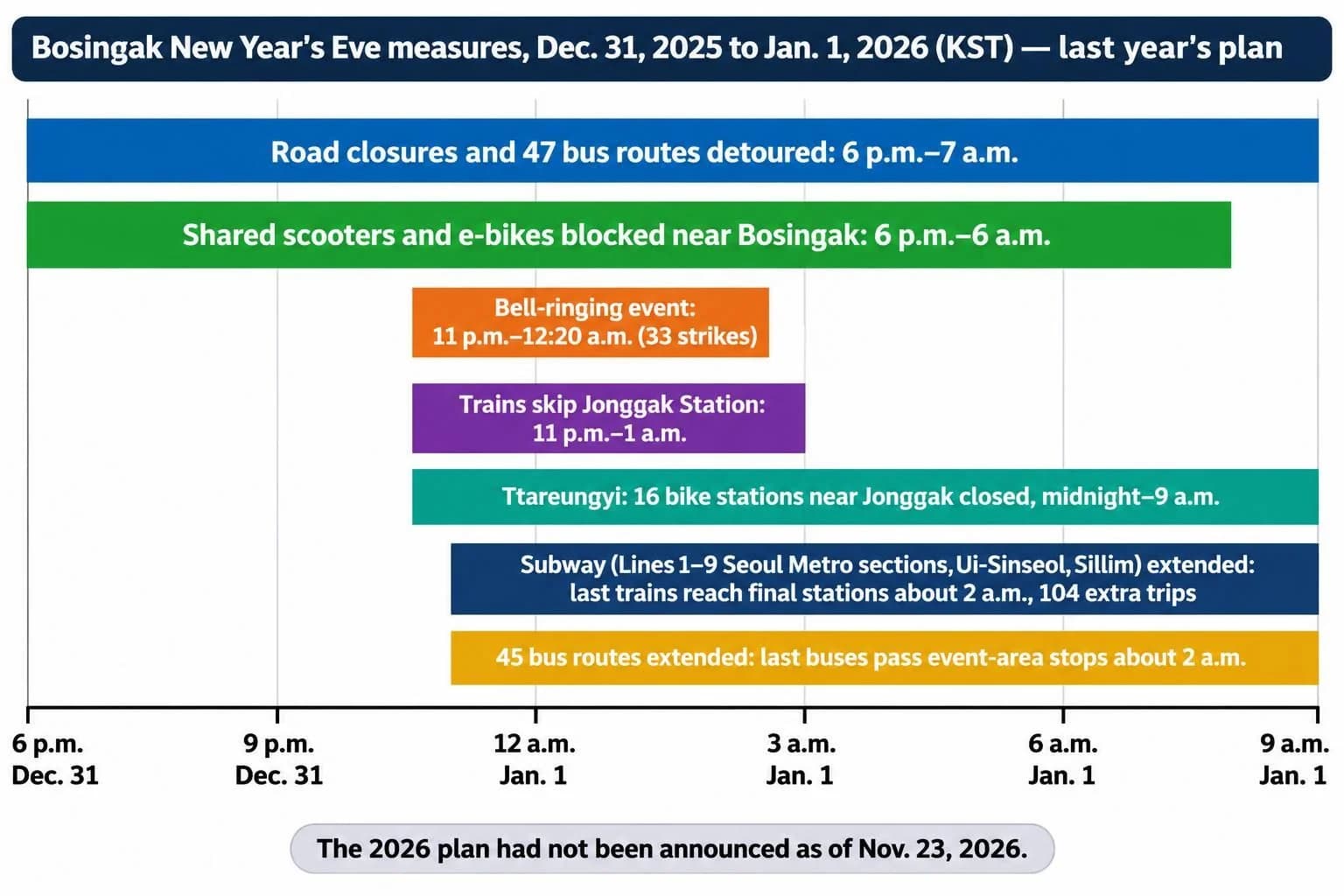
The 2025–26 ceremony ran from 11 p.m. on December 31 to 12:20 a.m. on January 1. The bell was struck 33 times while a media show played across the front of the pavilion. Performances before and after the bell were free to watch with no registration. The city deployed about 820 safety and traffic staff, police and other agencies added about 1,700 more, and there were medical booths and four warming shelters. The event was also streamed on the Seoul city YouTube channel. Seoul has not yet confirmed the 2026 program. The figures below come from last year's official transport and safety plan.
| Measure | Time | Details |
|---|---|---|
| Road closures and bus detours | 6 p.m. Dec. 31 to 7 a.m. Jan. 1 | 47 city bus routes detoured around Jongno, Cheonggyecheon-ro and Ujeongguk-ro |
| Trains skip Jonggak Station | 11 p.m. Dec. 31 to 1 a.m. Jan. 1 | Riders were sent to City Hall (Lines 1, 2), Jongno 3-ga (Lines 1, 3, 5), Euljiro 1-ga (Line 2) and Gwanghwamun (Line 5) |
| Later subway service | Last trains reached their final stations by about 2 a.m. | Lines 1–9 (Seoul Metro sections), Ui-Sinseol and Sillim lines; 104 extra trips |
| Later bus service | Last buses passed event-area stops around 2 a.m. | 45 routes, toward their final stops |
| Ttareungyi bike stations closed | Midnight to 9 a.m. Jan. 1 | 16 stations near Jonggak |
| Shared scooters and e-bikes blocked | 6 p.m. Dec. 31 to 6 a.m. Jan. 1 | No rentals or returns in the Bosingak area |
Getting home: plan around the 2 a.m. cutoff
The extended service ends earlier than "2 a.m." suggests at stations near Bosingak, because that time applies to trains reaching the end of the line. Last year, for example:
- Line 1 from Jonggak toward Seoul Station: last train at 1:53:30 a.m.
- Line 2 outer loop from City Hall toward Hongik University: 1:54:30 a.m.
- Line 5 from Gwanghwamun toward Gunja: 1:41:50 a.m.
The city warned that riders heading to Incheon or Gyeonggi Province, or boarding at other stations, need to check the timetable for their own station. That is the main risk for anyone staying outside Seoul. Walking 10 minutes to a less crowded station like Euljiro 1-ga or Jongno 3-ga can also be easier than squeezing toward Jonggak. Seoul usually releases its transport plan in the last week of December. For questions, call the Dasan Call Center on 02-120.