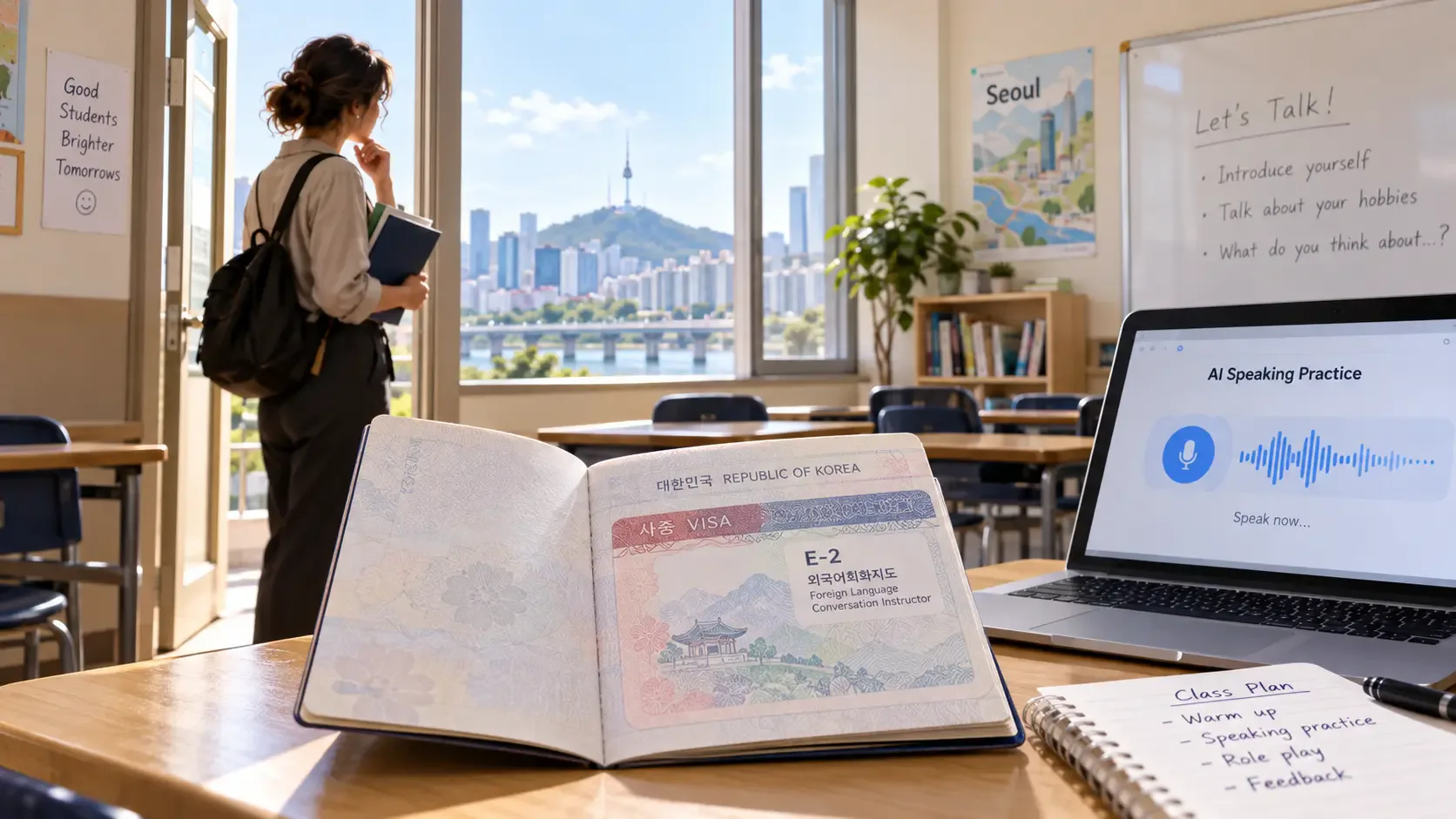
EPIK's Spring 2027 application opened on August 1, 2026, and the official application page currently says applications are available. For people hoping to teach English in a Korean public school next year, the useful question is no longer when the portal opens. It is whether they qualify, how quickly they can assemble the documents, and whether the location and working conditions fit their plans.
EPIK, the English Program in Korea, recruits teachers for public schools through Korea's education offices. Its spring main intake normally arrives in late February, followed by some later positions in March or April. This is a different route from a private academy, or hagwon: the employer, schedule, application process and placement decision can all differ.
What is open now, and how do you apply?
The Spring 2027 application is on EPIK's Apply Now page, which links to the JinhakApply application portal. EPIK describes selection as similar to rolling admission: earlier complete applications, followed by a complete document package after a successful interview, have a better chance of being processed for a possible placement. That is an advantage in timing, not a promise of a job or a preferred city. EPIK has not announced a single universal closing date on the current Apply Now page; check it again before you submit.
You can apply directly or through an official EPIK partner or recruitment agency. If you use a partner, follow its instructions before creating an account or submitting the online application, as EPIK requests. Its application guide explains the routes.
Check eligibility before paying for certificates
According to EPIK's current eligibility page, applicants generally need citizenship of Australia, Canada, Ireland, New Zealand, South Africa, the United Kingdom or the United States, along with at least a bachelor's degree and the specified educational background. The page also explains narrower pathways for eligible Indian citizens under the Korea–India CEPA and for some Korean citizens with qualifying residence and English-language education abroad. Do not assume that speaking English fluently by itself meets the citizenship and schooling rules.
An applicant with an education degree, qualifying education-focused major, teaching license or equivalent qualification listed by EPIK may not need a separate TEFL/TESOL/CELTA certificate. A graduate in another field generally needs an accredited certificate of at least 100 hours. EPIK says such applicants may apply while completing it, provided it is finished at least six weeks before the expected arrival. Read the exact category on the official page before buying a course; a generic course advert is not an eligibility ruling. The special Indian CEPA route requires an English education teaching certificate and cannot be met with TEFL alone.
Start the paperwork before the interview
EPIK's Spring 2027 document guide says the formal package is submitted after a successful interview, but recommends preparing early. A national-level criminal record check with an apostille and an authenticated, apostilled copy of the bachelor's degree can take time. The general list also includes a signed printout of the online application, a professional photo, a passport information-page copy, sealed academic transcripts, two original professional recommendation letters and applicable teaching, TEFL and experience records. Country and personal circumstances can change the precise requirements.

Do a document audit now: check your passport validity, identify the correct national background-check authority, ask referees whether they can provide letters in EPIK's required format, and read each detailed document instruction before ordering or mailing originals. EPIK's letter rules include original ink signatures and additional conditions for current teachers in Korea. A delayed apostille or an unsuitable reference can matter more than a polished application essay.
What work and pay should you expect?
EPIK teachers may assist or teach alongside a Korean co-teacher, plan materials, run conversation classes and help with English camps. Its duties page describes an eight-hour workday, five days a week, with up to 22 instructional hours weekly before applicable overtime. The contract is normally one year. School vacations do not automatically mean every day is leave; camps and other duties may fall during vacation periods. The exact contract and placement office govern the details.
For a pay benchmark, EPIK's published scale, last updated May 4, 2026 for the Fall 2026 intake, listed Level 2 base pay of approximately KRW 2.2 million to 2.35 million per month across the provinces shown. EPIK says education offices are not currently hiring Level 3 applicants, and that Seoul uses a separate pay scale. The scale can change between intakes, so this is not a confirmed Spring 2027 offer. EPIK also describes provided accommodation, a settling allowance and contract-completion benefits, with deductions, regional differences and conditions to check in the actual offer. Budget for the first month and ask how your particular office handles housing, utilities and arrival expenses.
The timeline—and the location trade-off
EPIK's general timeline places spring applications from August into January, interviews and document handling mainly from October through January, visa steps around December to February, and orientation in late February. These are planning windows, not a personalized appointment. Applicants generally need the appropriate status before attending orientation or working; EPIK notes exceptions for some F-4/F-6 or Korean passport holders.
You can express a regional preference, but a successful interview does not reserve Seoul, Busan or any other city. Education offices make placement decisions, and EPIK says your school level and even the possibility of multiple work sites may become clear only later. If you are flexible about region, the EPIK Plus Jeonnam option is another route worth examining; it prioritizes processing for qualifying placements in rural Jeollanam-do, with its own stated conditions. If a particular city is non-negotiable, treat that as a genuine constraint before investing in the process.
A practical September checklist
Confirm your citizenship, schooling, degree and TEFL or teaching-credential route against EPIK's current rules.
Read the Spring 2027 preparation guide and decide whether to apply directly or through an official partner.
Start the national criminal check, degree authentication and referee requests early; follow EPIK's document instructions exactly.
Prepare examples of co-teaching, lesson planning, adapting to different ages and living outside your first-choice city for the interview.
Compare the final contract, pay level, housing arrangements and location against your own budget before accepting.
EPIK is one live route into Korean public schools, even as broader discussion of English-teaching visas has become more cautious. Use EPIK's current application and document pages for the decision that applies to you.